


Yama No Chaya
Hakone / 箱根
This pretty ryokan in the mountains near the onsen hot spring town of Hakone has been a local instit
The Story
This pretty ryokan in the mountains near the onsen hot spring town of Hakone has been a local institution for over 50 years. With a rustic atmosphere and a friendly, family-style vibe, Yama No Chaya features baths filled with water drawn from its own spring on the property, as well as some outstanding cuisine.
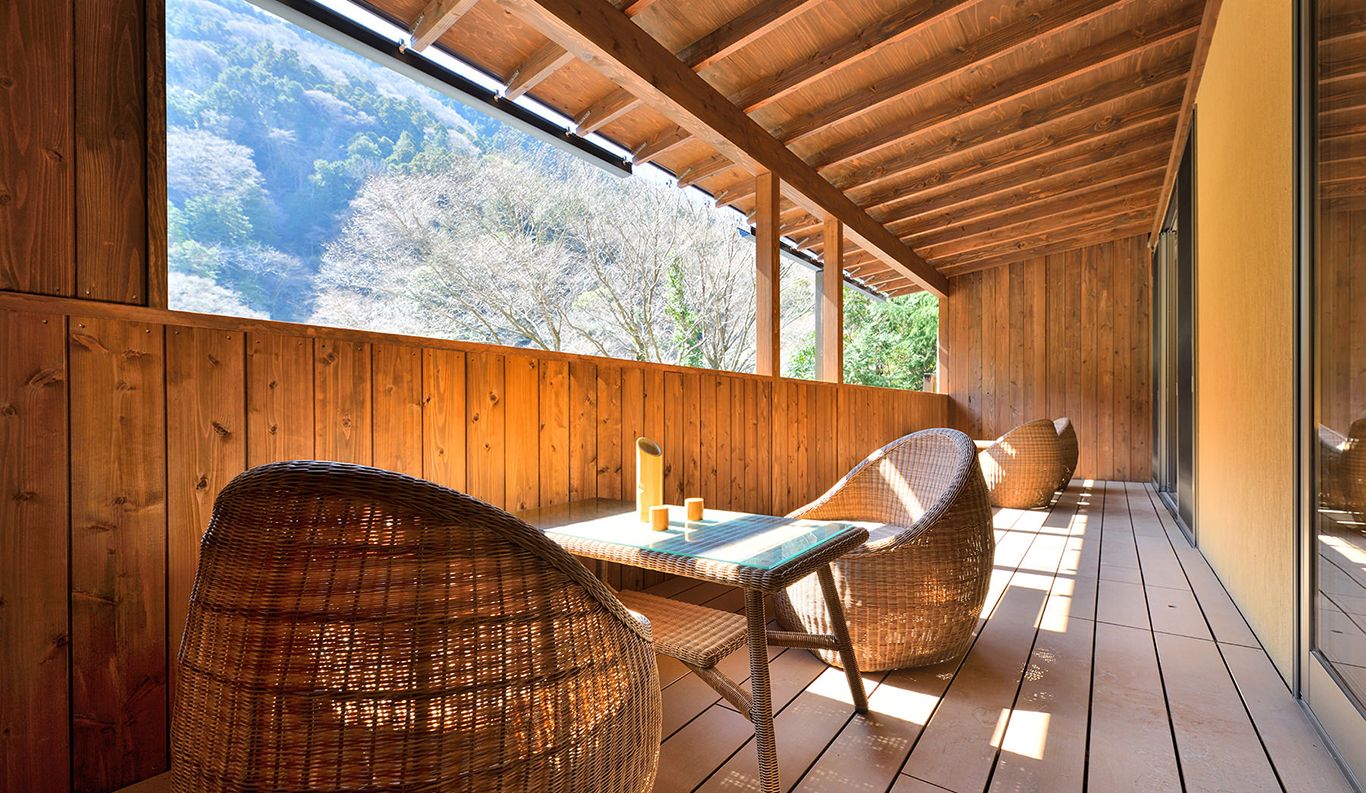
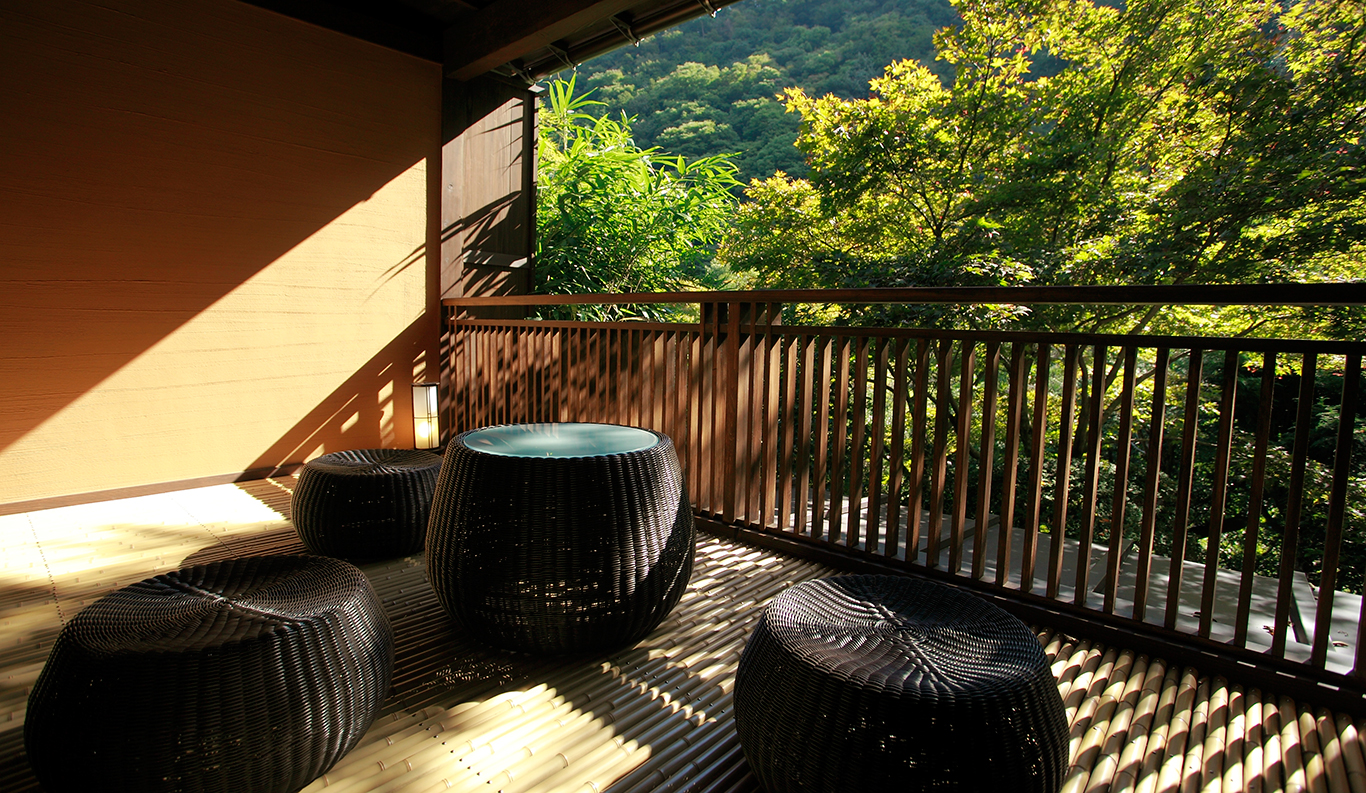
Yama No Chaya takes its name from "mountain teahouse," a friendly place where people can easily drop in for tea and comfort. Its beautiful mountain location in Hakone is a cool respite from Tokyo's summer heat, and in the fall, it becomes a popular destination for people who love to watch the koyo, the leaves turning their autumn colors.
"We’re not trying to make a traditional ryokan here," said Mamoru Tamura, the owner of Yama No Chaya. "Rather, we’re trying to create a place of fun and discovery. We hope to create a ryokan where we ourselves would want to stay and encourage guests to come back and find their fun side."
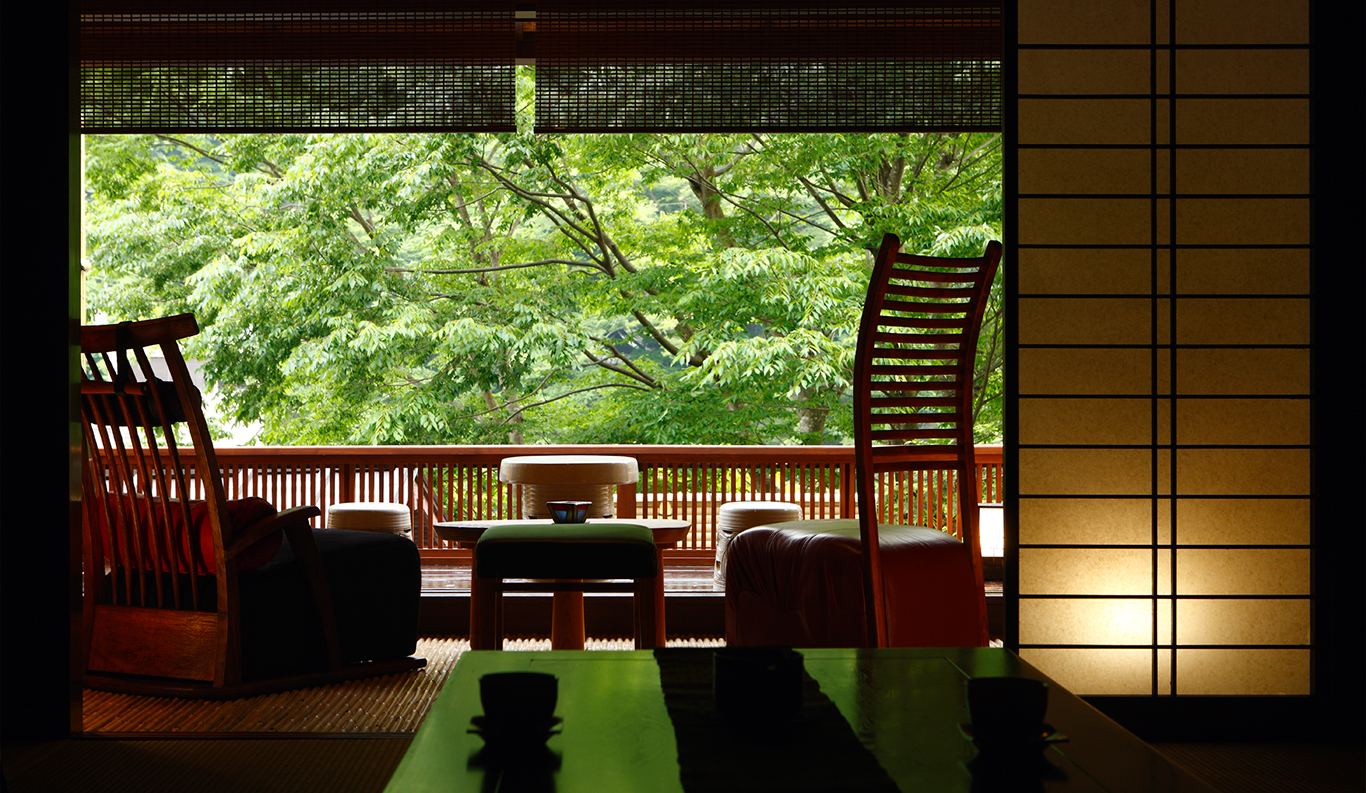
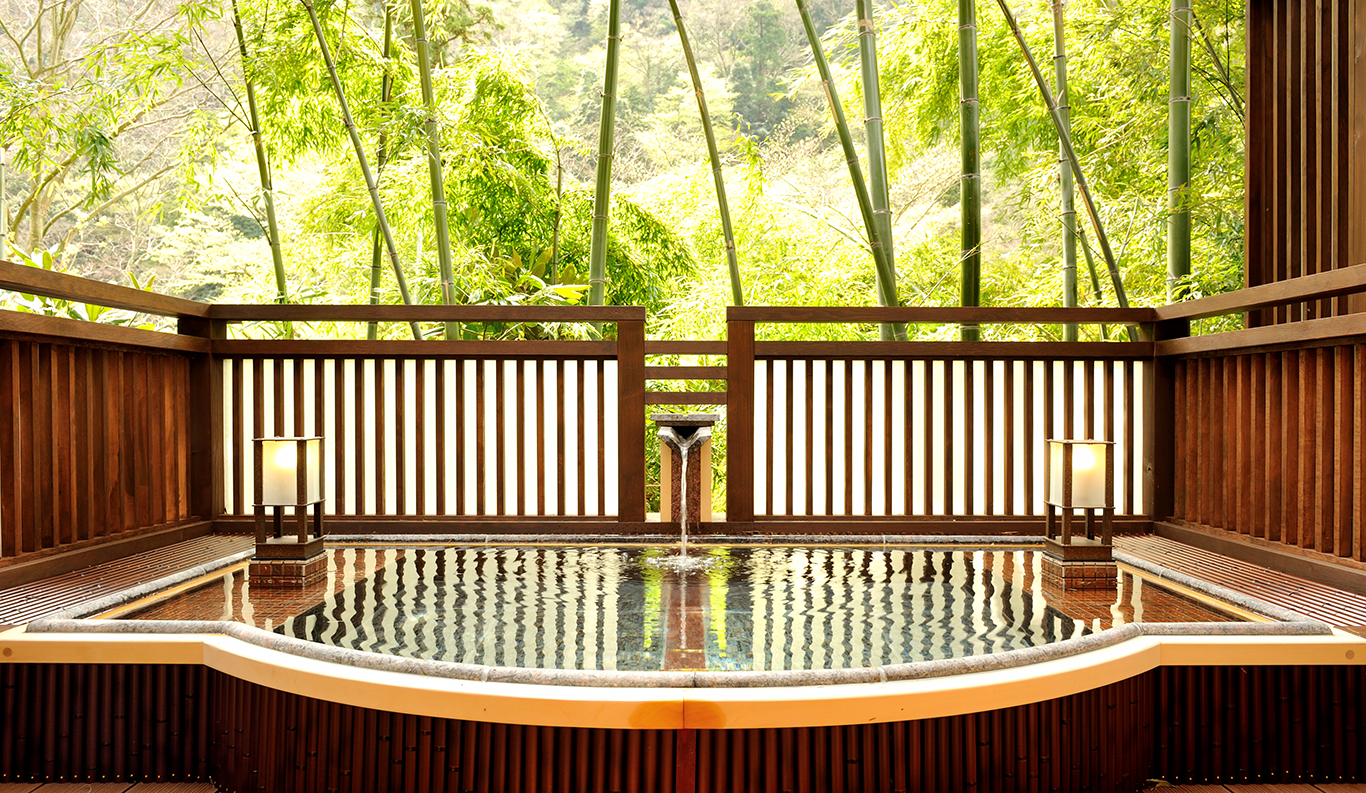
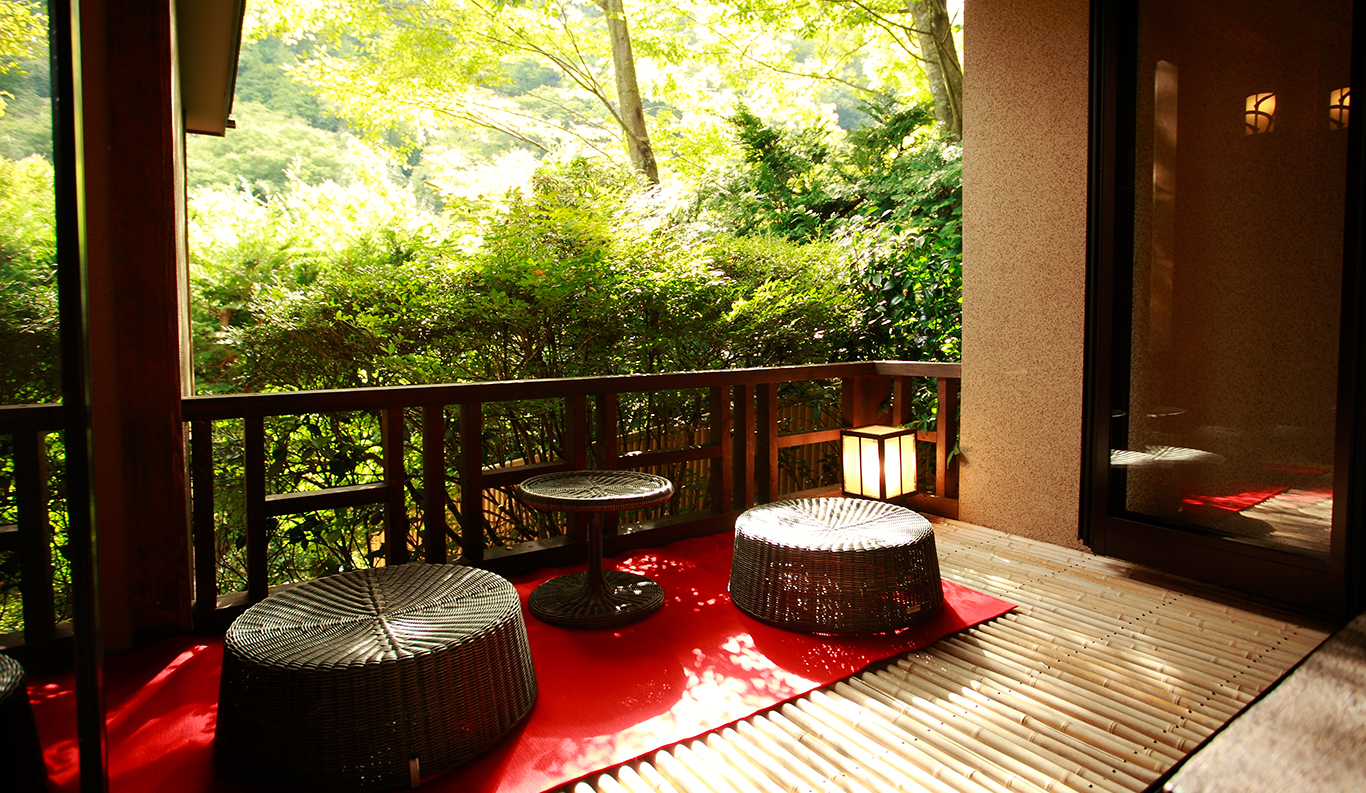
And an appreciation of the simple things - friends, family, pretty sounds of water from the Hayakawa River and the swish of bamboo in the mountain breezes.
Yama No Chaya takes its name from "mountain teahouse," a friendly place where people can easily drop in for tea and comfort. Its beautiful mountain location in Hakone is a cool respite from Tokyo's summer heat, and in the fall, it becomes a popular destination for people who love to watch the koyo, the leaves turning their autumn colors.
"We’re not trying to make a traditional ryokan here," said Mamoru Tamura, the owner of Yama No Chaya. "Rather, we’re trying to create a place of fun and discovery. We hope to create a ryokan where we ourselves would want to stay and encourage guests to come back and find their fun side."
And an appreciation of the simple things - friends, family, pretty sounds of water from the Hayakawa River and the swish of bamboo in the mountain breezes.
ROOMS
-
 ROOM
Special Room - Asebi
A private cypress open-air bath with a refreshing breeze blows in, and a charming moon-viewing …
ROOM
Special Room - Asebi
A private cypress open-air bath with a refreshing breeze blows in, and a charming moon-viewing …
-
ROOM
Special Room - Yamayuri
This newly renovated room added in March 2023 and is a Japanese-style suite room with a tastefu…
-
ROOM
Special Room A - Yama no Tomoshibi
The private open-air bath, where the refreshing mountain breeze blows in, has a tasteful washed…
-
ROOM
Special Room B - Yama no Ashita
This room features futons, a tatami room and a sitting area overlooking the forested slopes abo…
-
ROOM
Special Room C – Himeshara/Kikyo
This is a twin room, with a rotemburo on the veranda made of hinoki wood and a sitting area tha…
-
ROOM
Tsukimidai-room Ajisai
The spacious, private stone open-air bath, complete with a moon-viewing platform offering a gre…
-
ROOM
Tsukimidai room Nadeshiko
The spacious stone open-air bath, filled with Tonosawa no Yu, a private hot spring pumped up fr…
-
ROOM
Tsukimidai-room Kaede
The spacious, private, open-air stone bath is filled with Tonosawa hot spring water, pumped up …
-
ROOM
Tsukimidai-room A - Yama no Ichigo
Korean sense and furnishings. A sitting room, easy chairs and a pretty maple tree that turns co…
-
ROOM
Tsukimidai-room B - Yama no Yuube
Tsukimidai means "moon-viewing deck," and these rooms have all been designed with this rather p…
-
ROOM
Japanese Twin Room - Takenoko
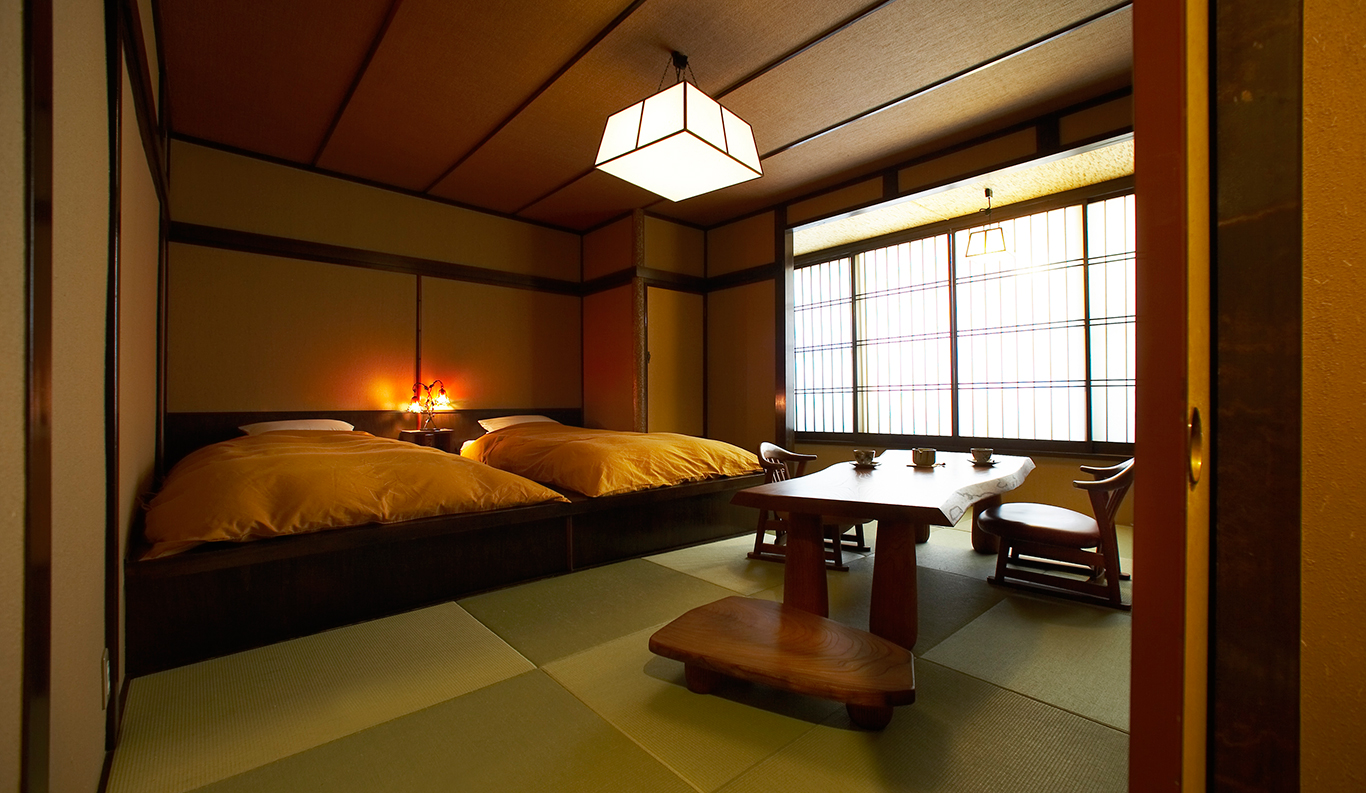
The ryokan's Western-style room is similar to the Japanese-style rooms, but with a raised platf…

-
ROOM
Special Room - Asebi
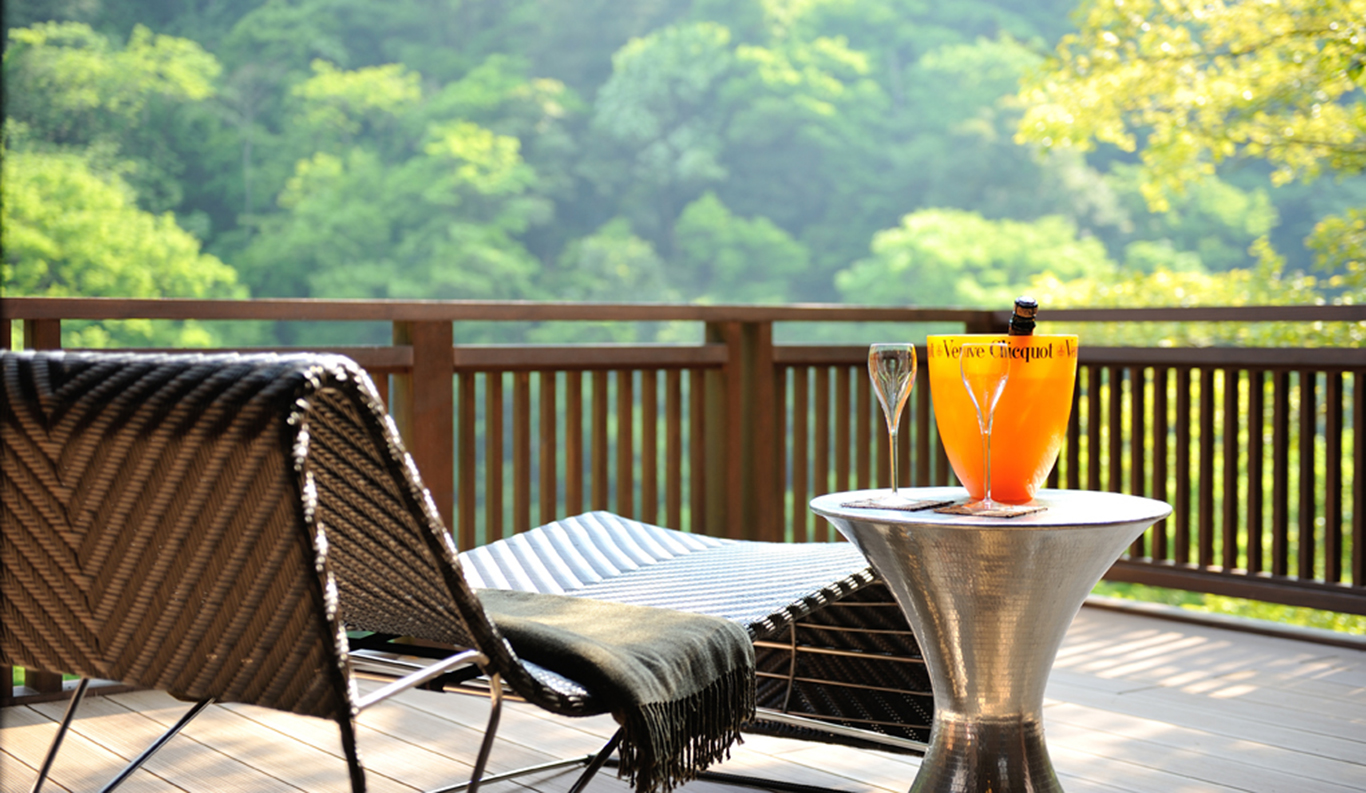
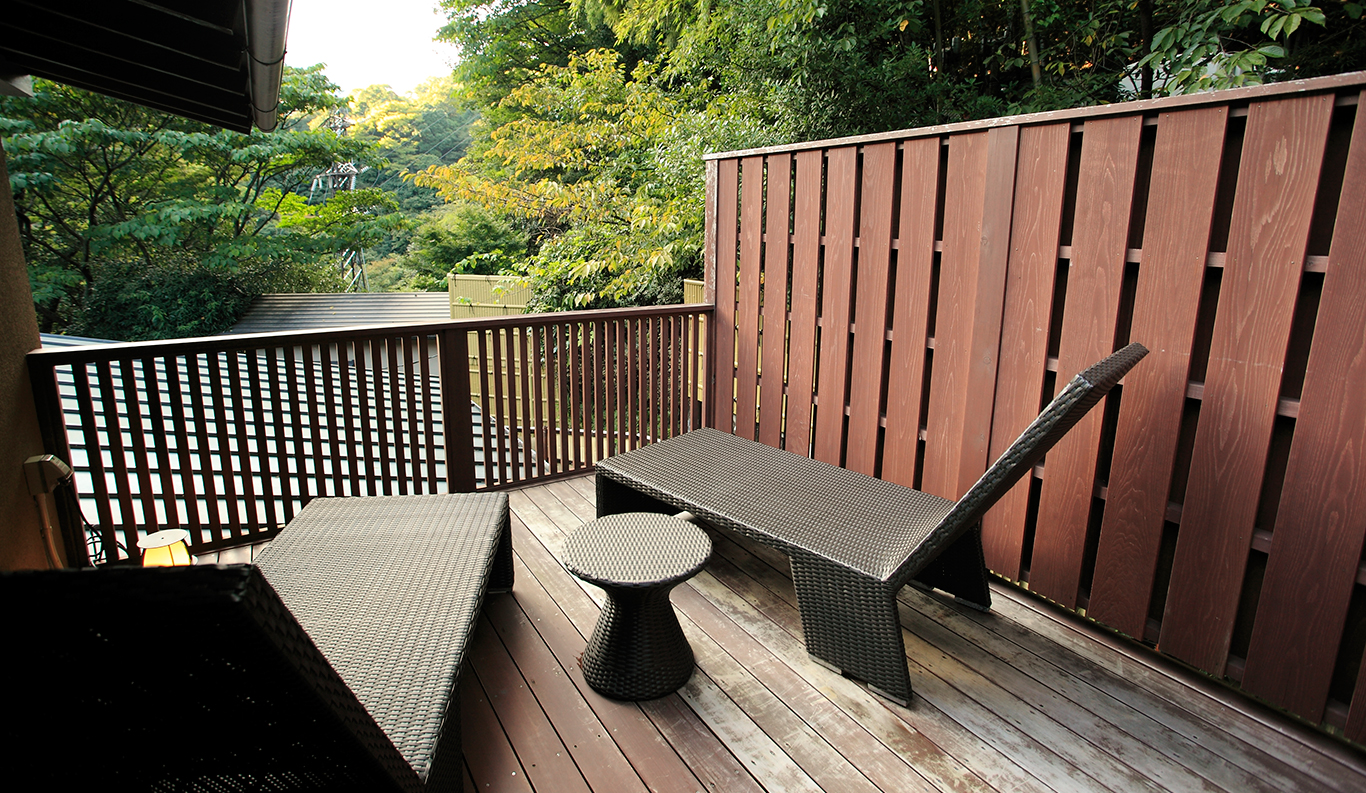
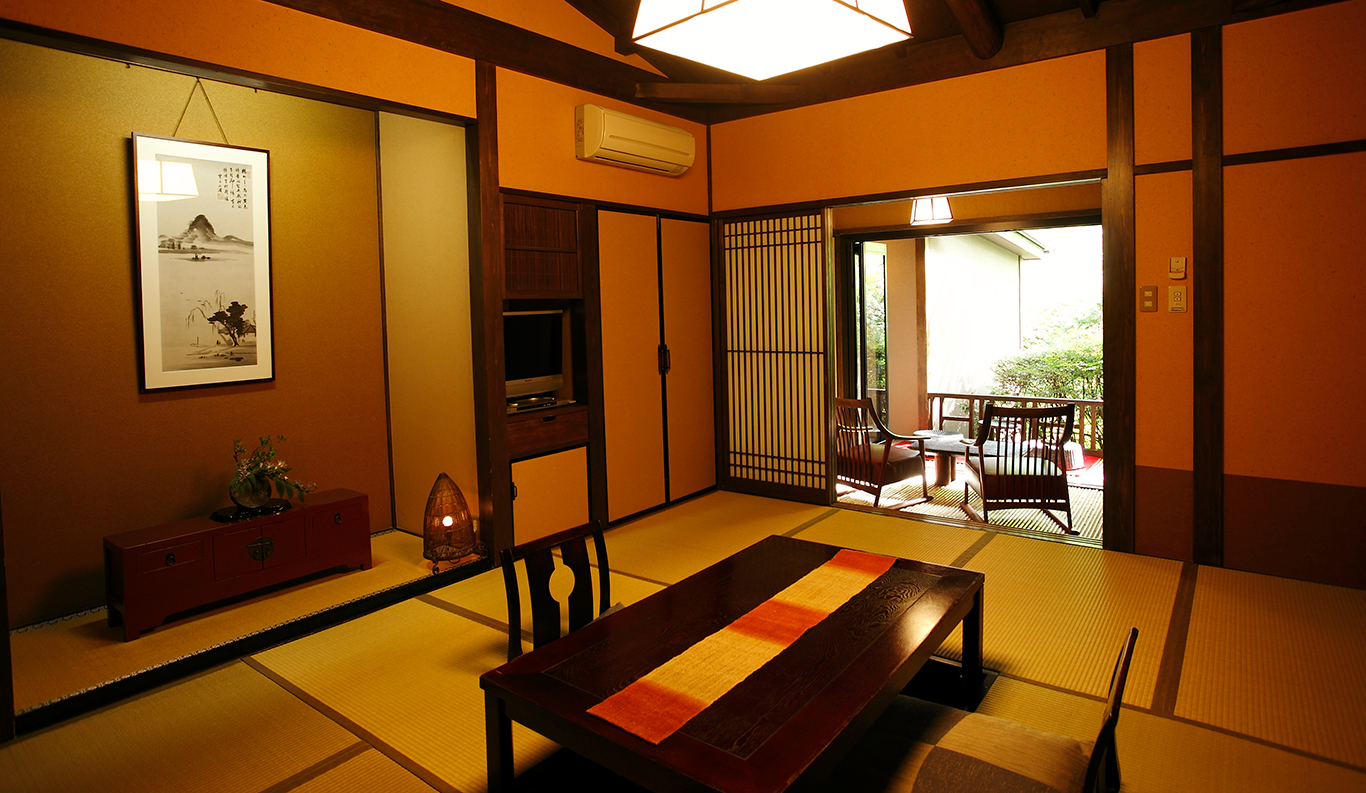
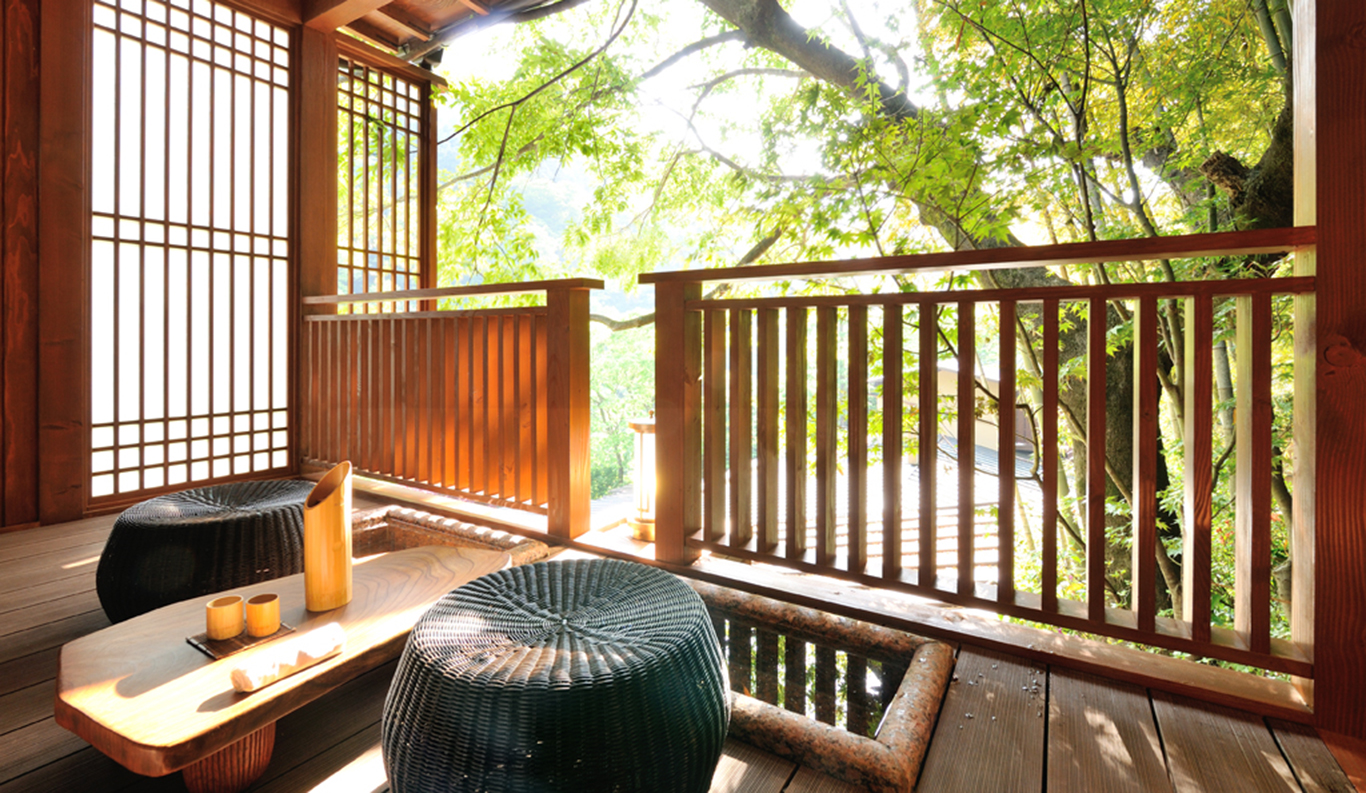
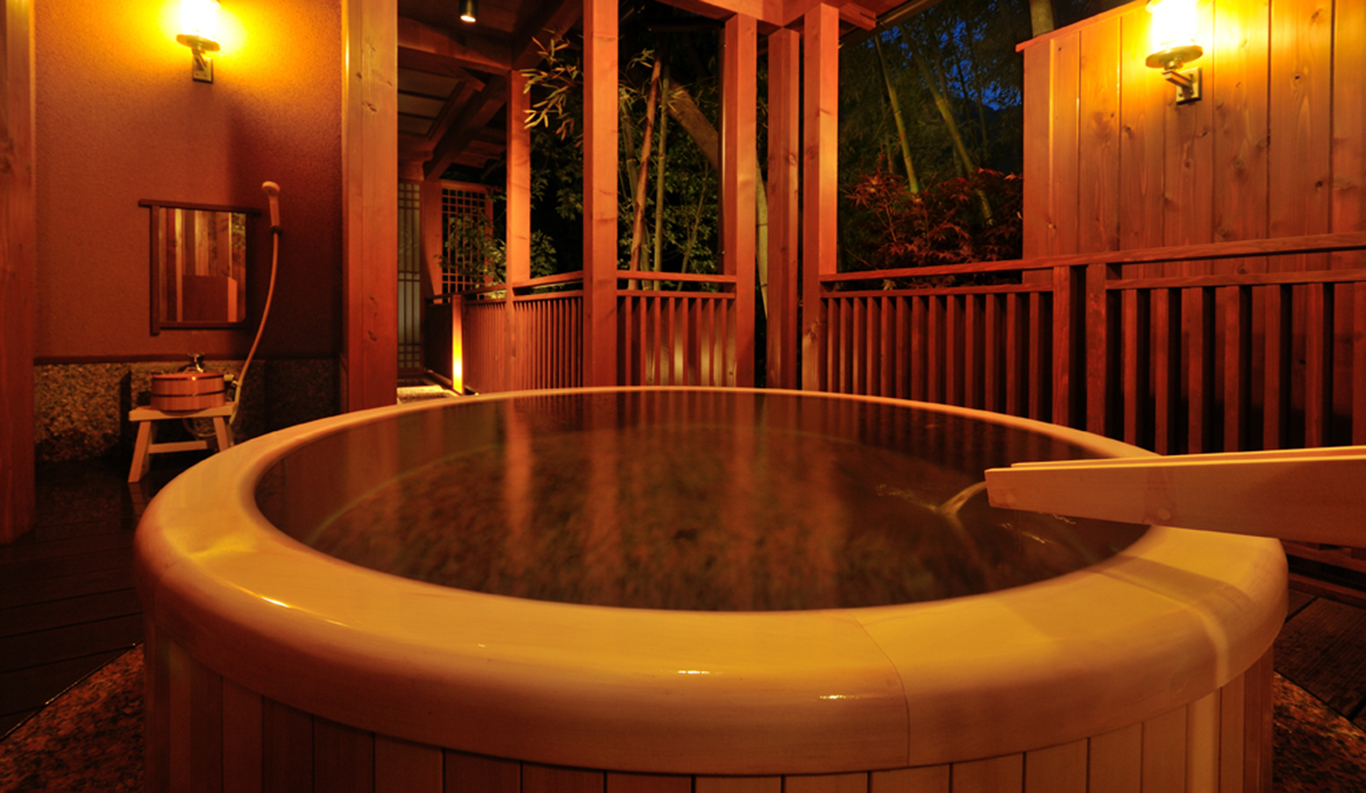
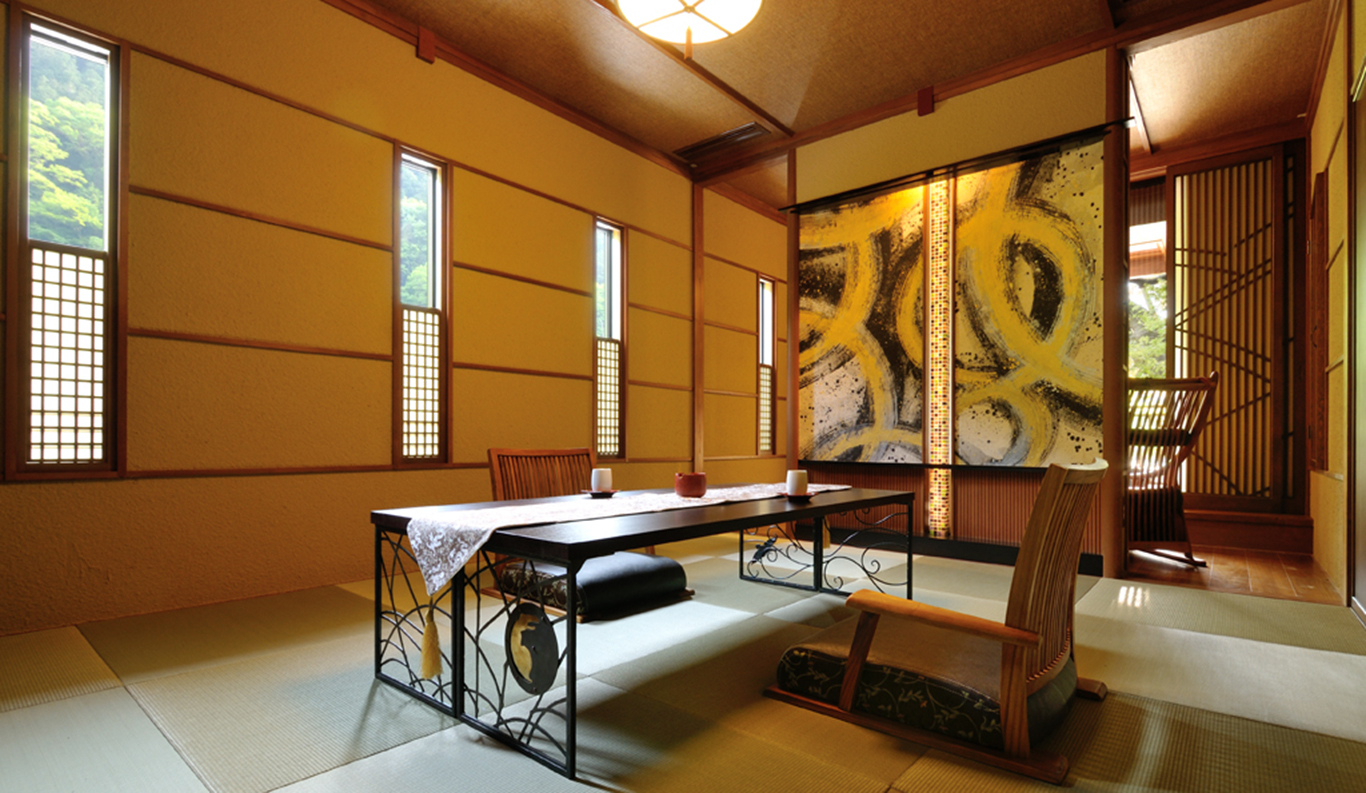
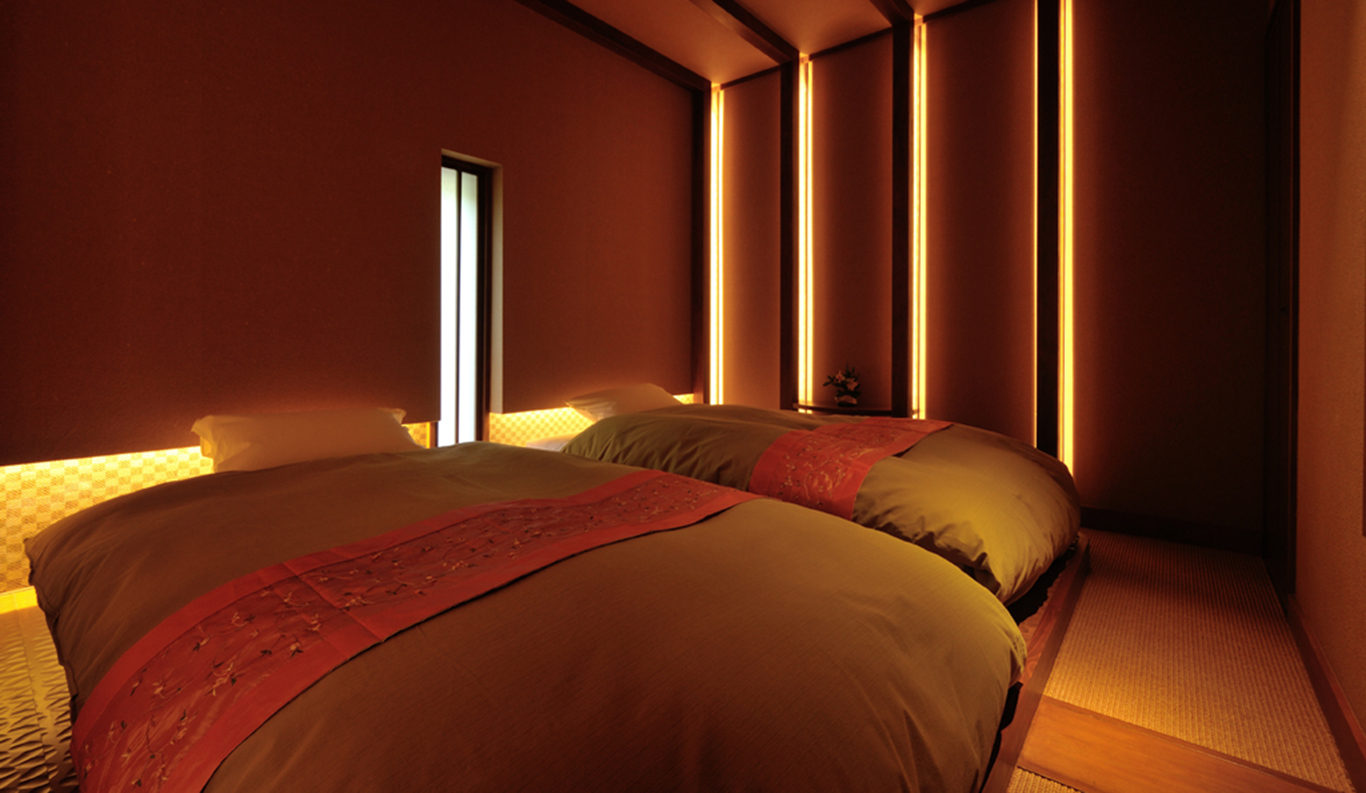
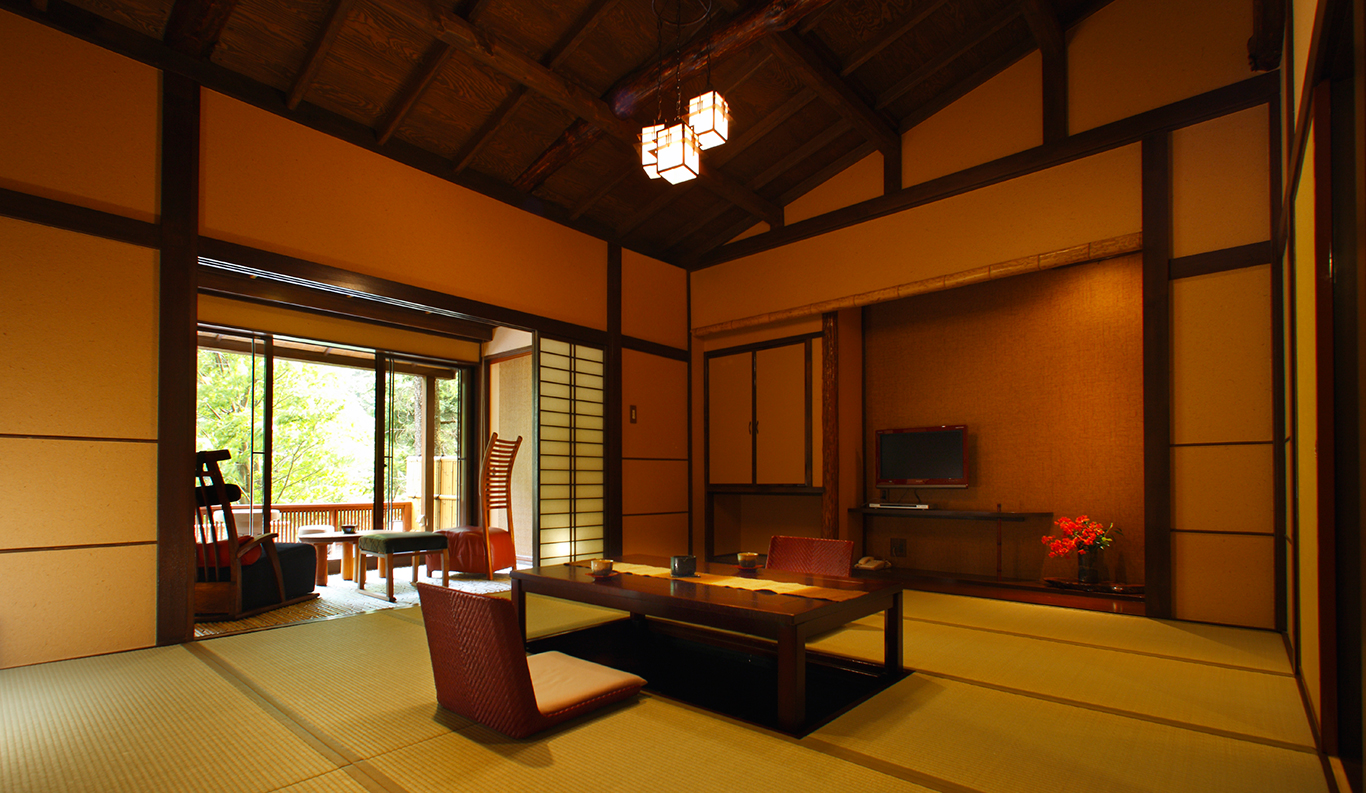
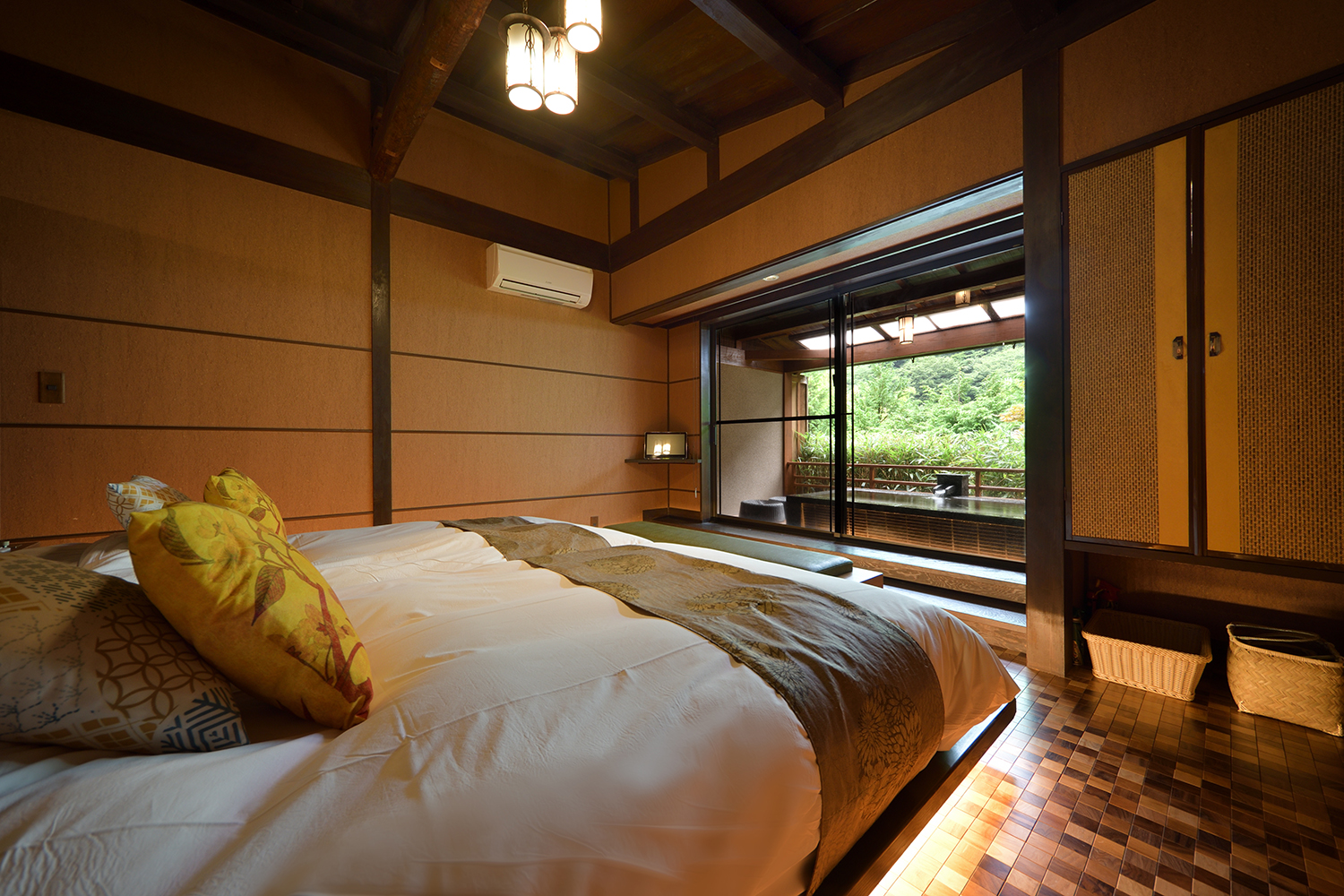
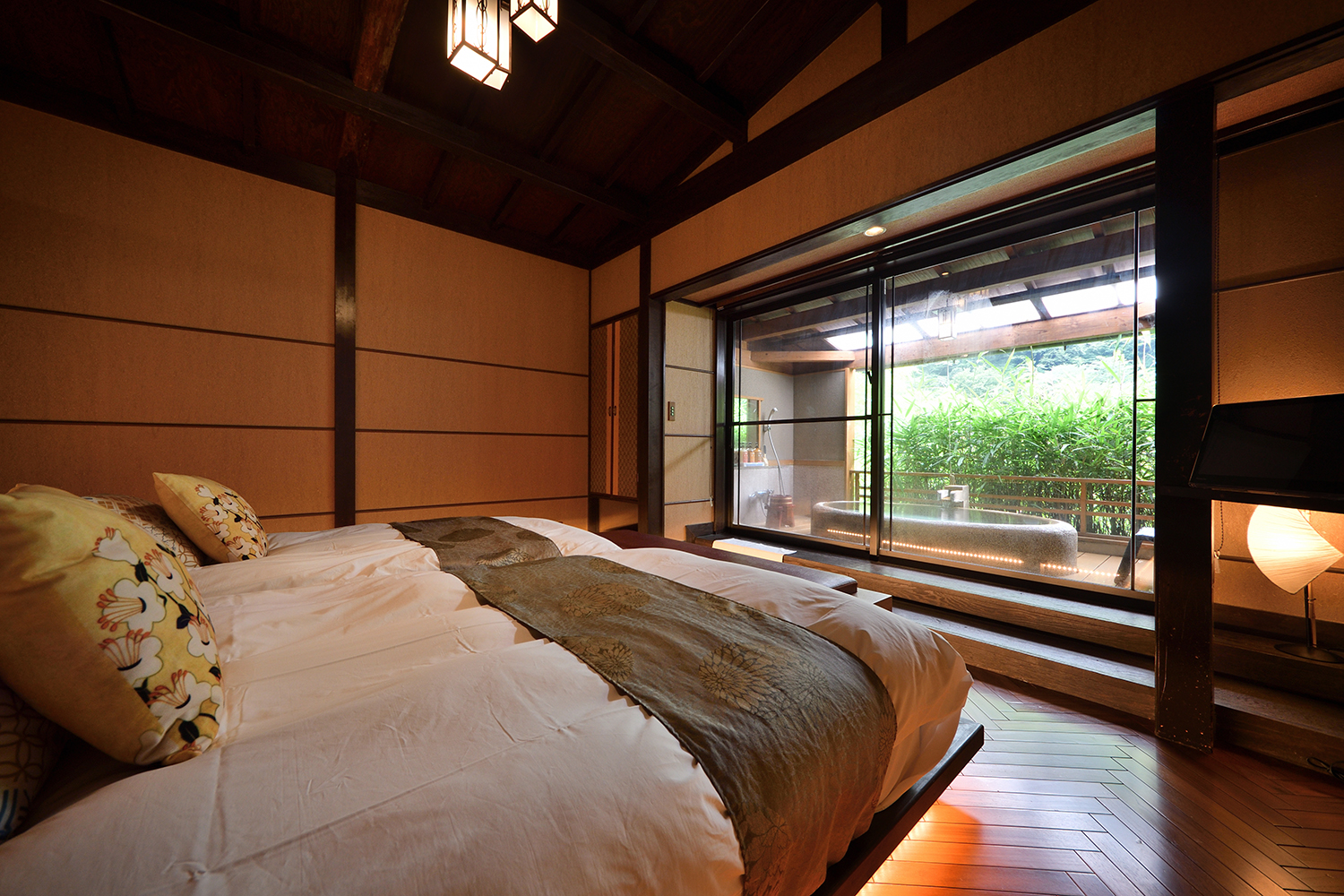
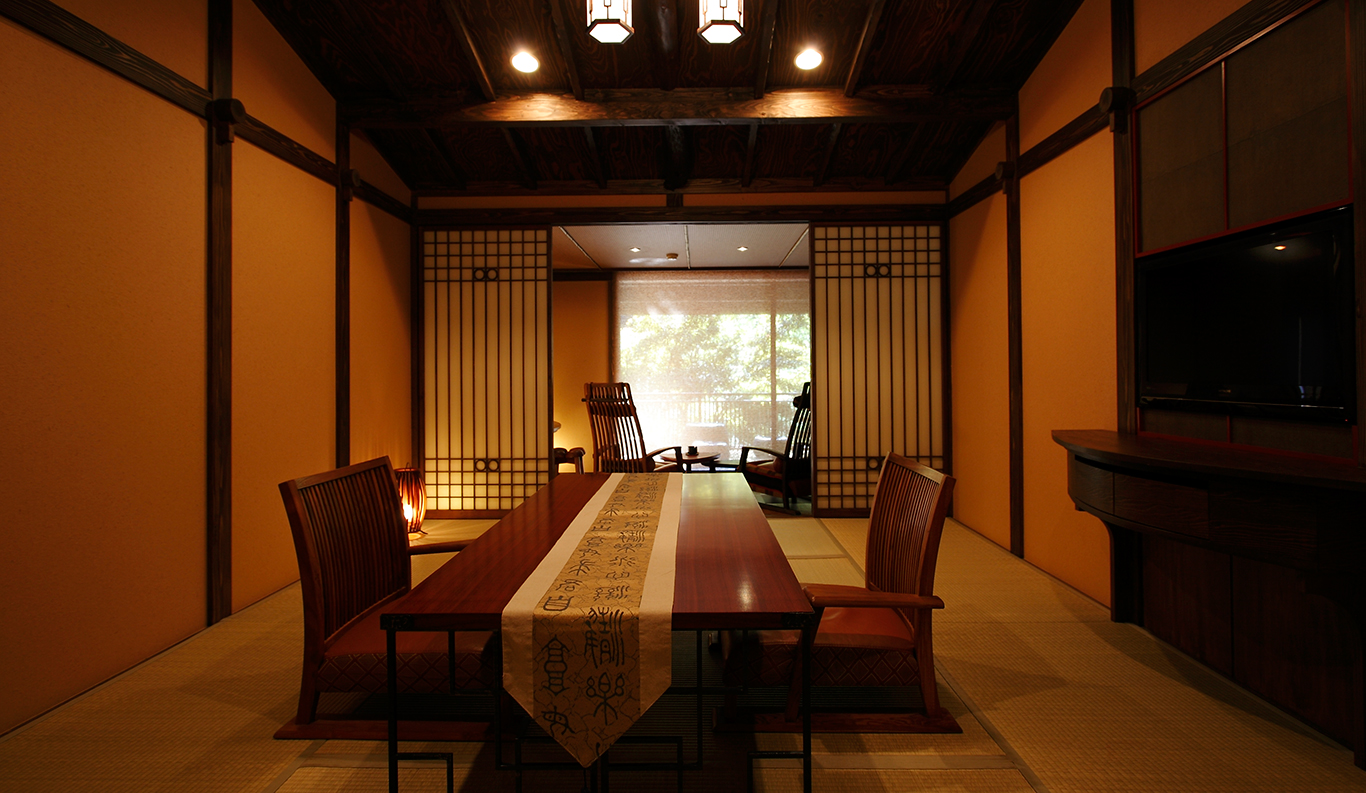
1-4 100 sqm Private Open-air Bath Bed A private cypress open-air bath with a refreshing breeze blows in, and a charming moon-viewing platform with two separate foot baths. From the observation deck on the top floor, you can fully enjoy the mountain views and quiet moonlit nights. The bedroom features accent lighting in an elaborately designed 10-tatami Japanese-style room. This special room is the most luxuriously appointed at our inn, allowing you to fully enjoy the view and open feeling from the top floor. ¥ 87,965~ per person (based on double occupancy) *Room rates at the Ryokan vary depending on the season and booking status. Therefore, we provide an estimated amount as a reference. REQUEST THIS ROOM -
ROOM
Special Room - Yamayuri
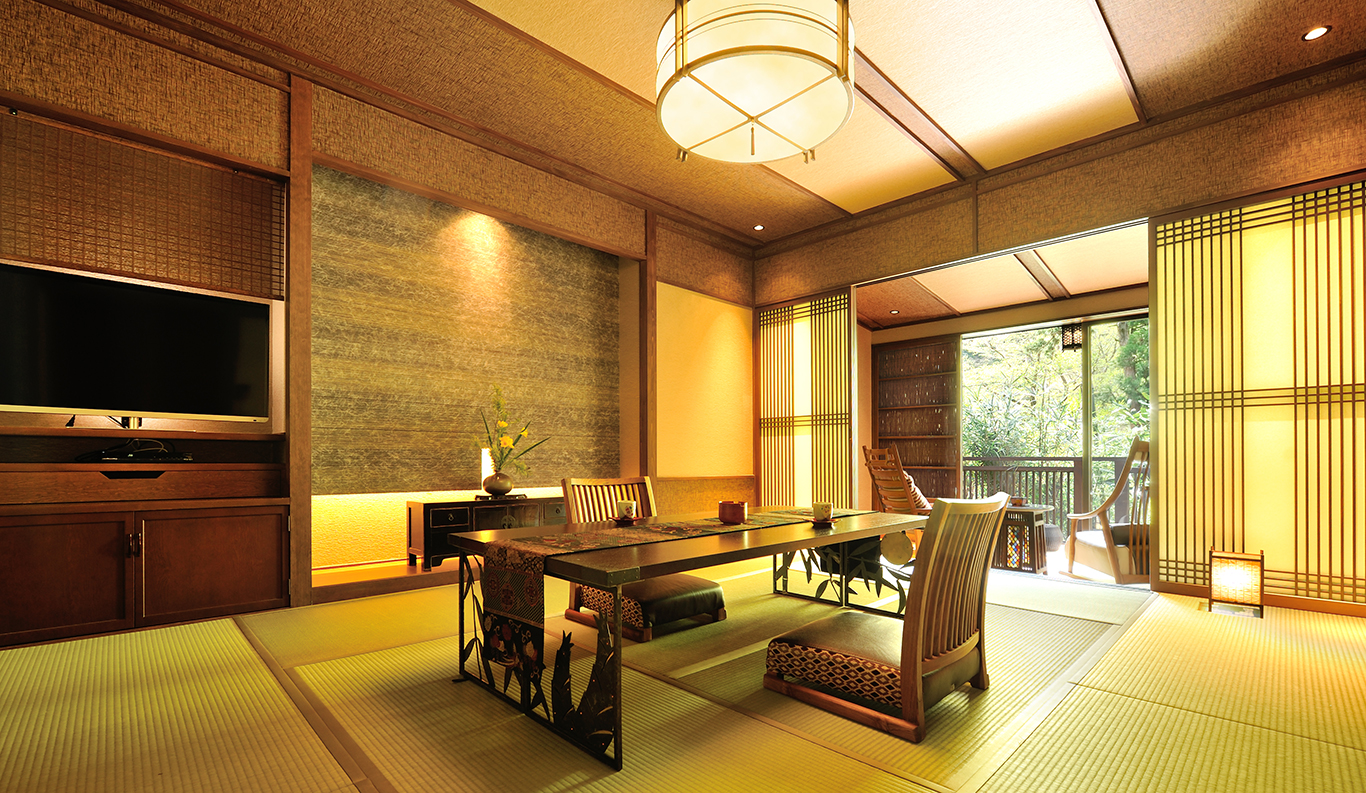
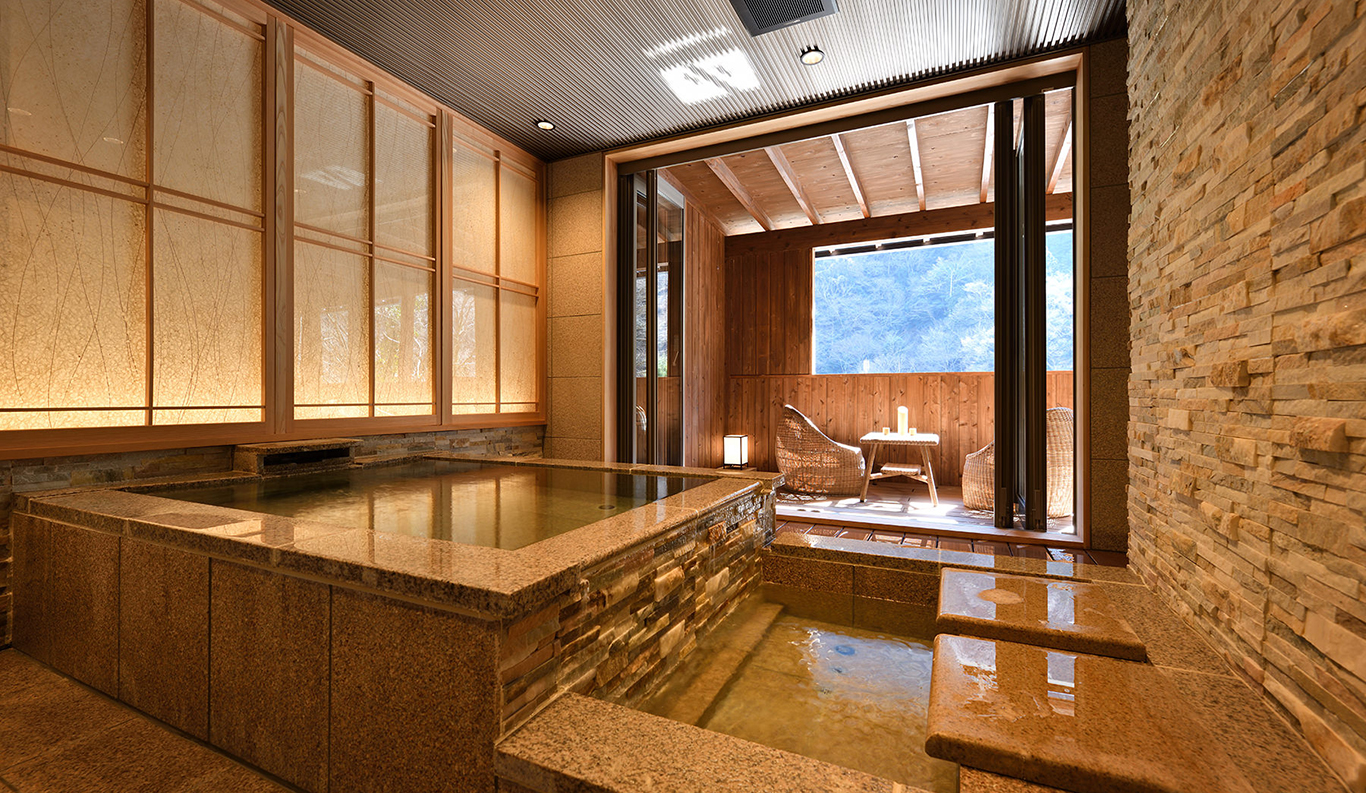
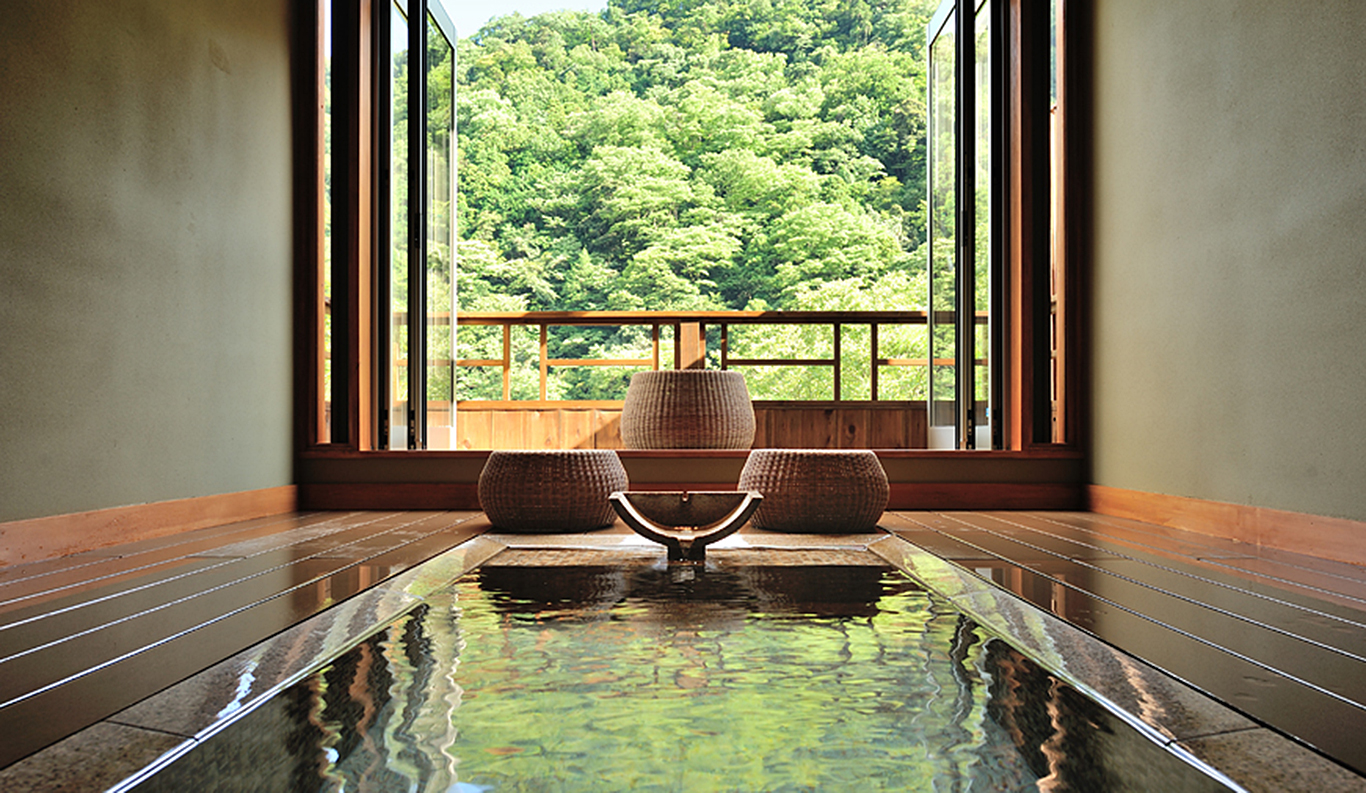
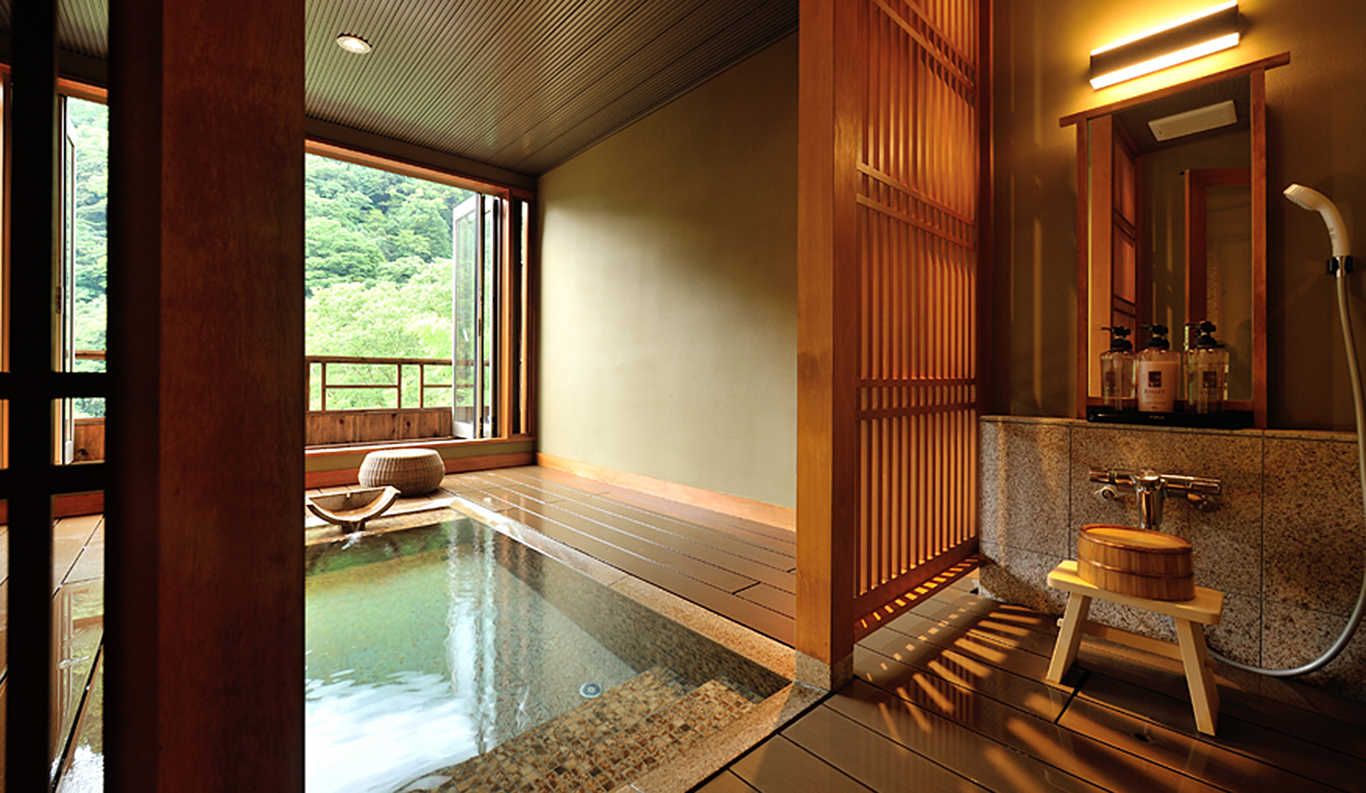
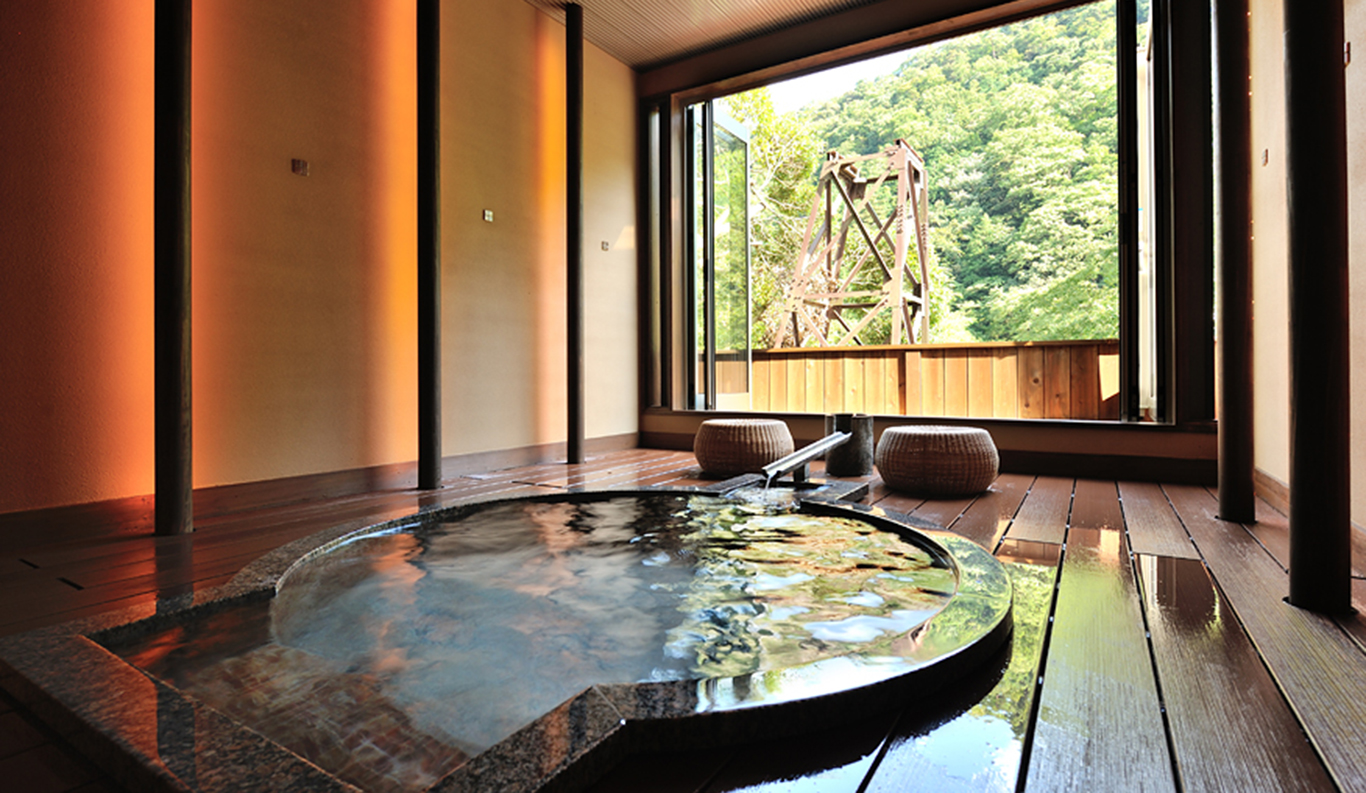
2-4 77 sqm Private Open-air Bath Bed This newly renovated room added in March 2023 and is a Japanese-style suite room with a tasteful tatami room and a bathroom connected by a wide moon-viewing platform. The open-air stone bath filled with Tonosawa no Yu, which is drawn from our own source from 300 meters underground. This open-air stone bath also has a footbath that will relax your feet from a long walk in Hakone. The twin bedroom is connected to the bathroom and has a large closet perfect for a long-term stay. ¥ 83,714~ per person (based on double occupancy) *Room rates at the Ryokan vary depending on the season and booking status. Therefore, we provide an estimated amount as a reference. REQUEST THIS ROOM -
ROOM
Special Room A - Yama no Tomoshibi
2-4 88 sqm Private Open-air Bath Bed The private open-air bath, where the refreshing mountain breeze blows in, has a tasteful washed-out southern gravel finish. It is a spacious bath that is large enough for two people to relax in comfortably. There is an open moon-viewing deck of 6 tatami mats and an adjacent 8 tatami mat Japanese-style room. On the upper floor there is a bedroom with a tranquil atmosphere. This luxurious, maisonette-style special room features moon-viewing decks on both the first and second floors, where you can enjoy mountain views and quiet, moonlit nights. ¥ 79,332~ per person (based on double occupancy) *Room rates at the Ryokan vary depending on the season and booking status. Therefore, we provide an estimated amount as a reference. REQUEST THIS ROOM -
ROOM
Special Room B - Yama no Ashita
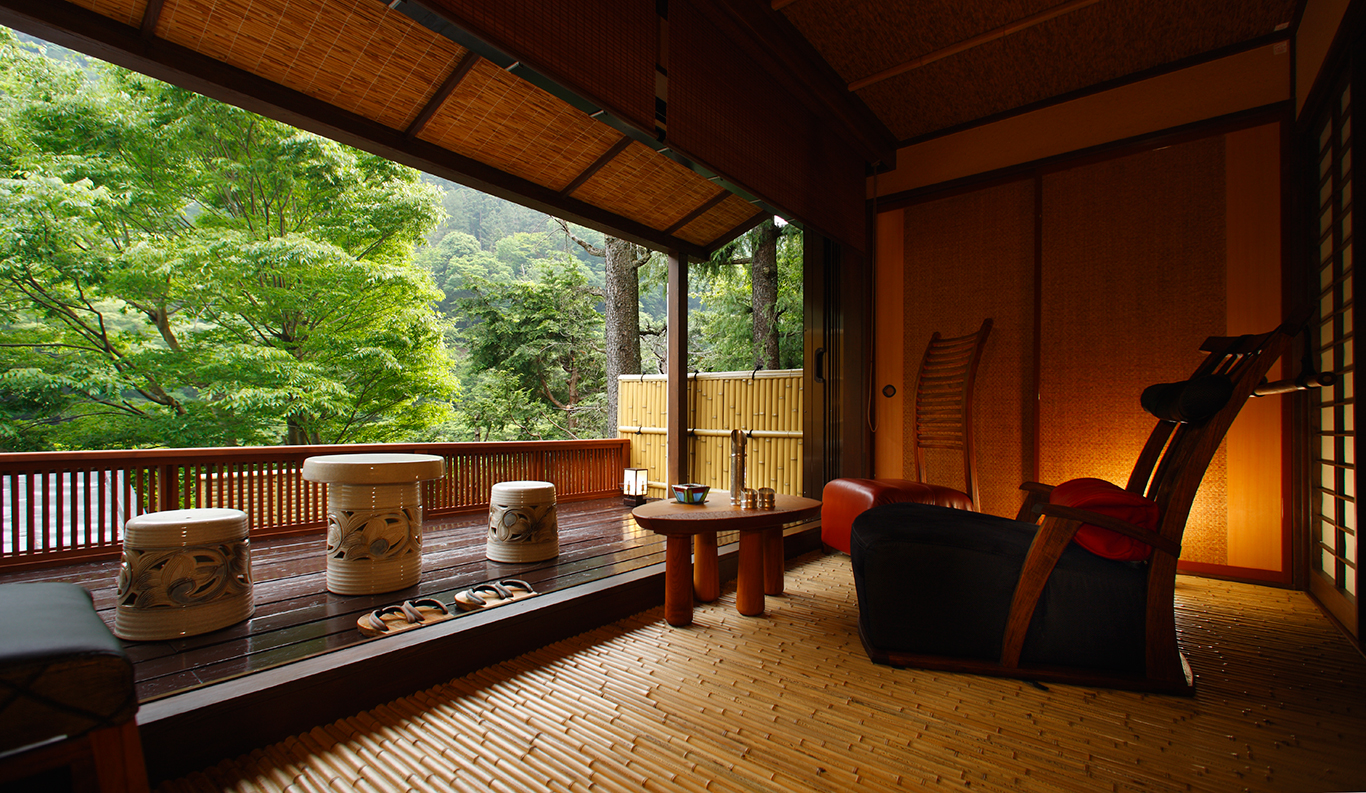
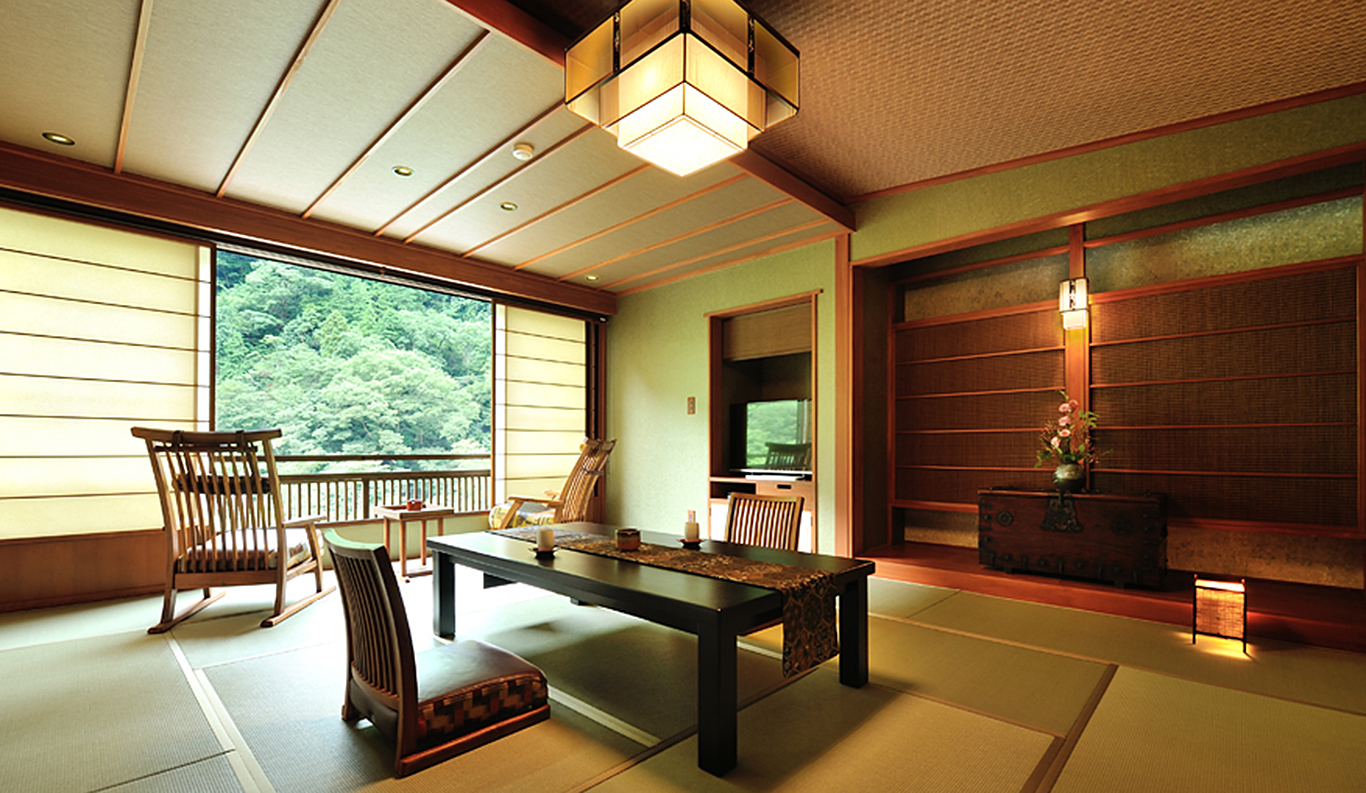
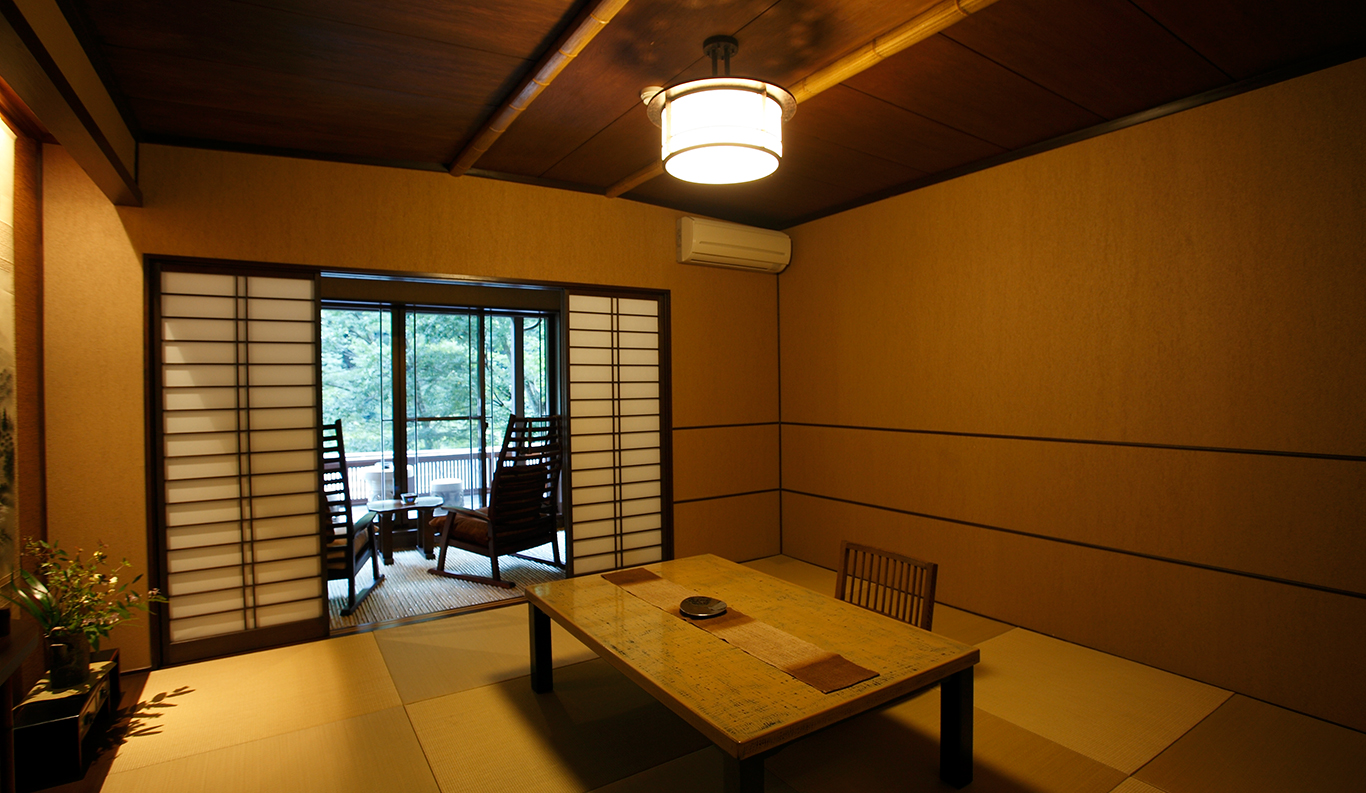
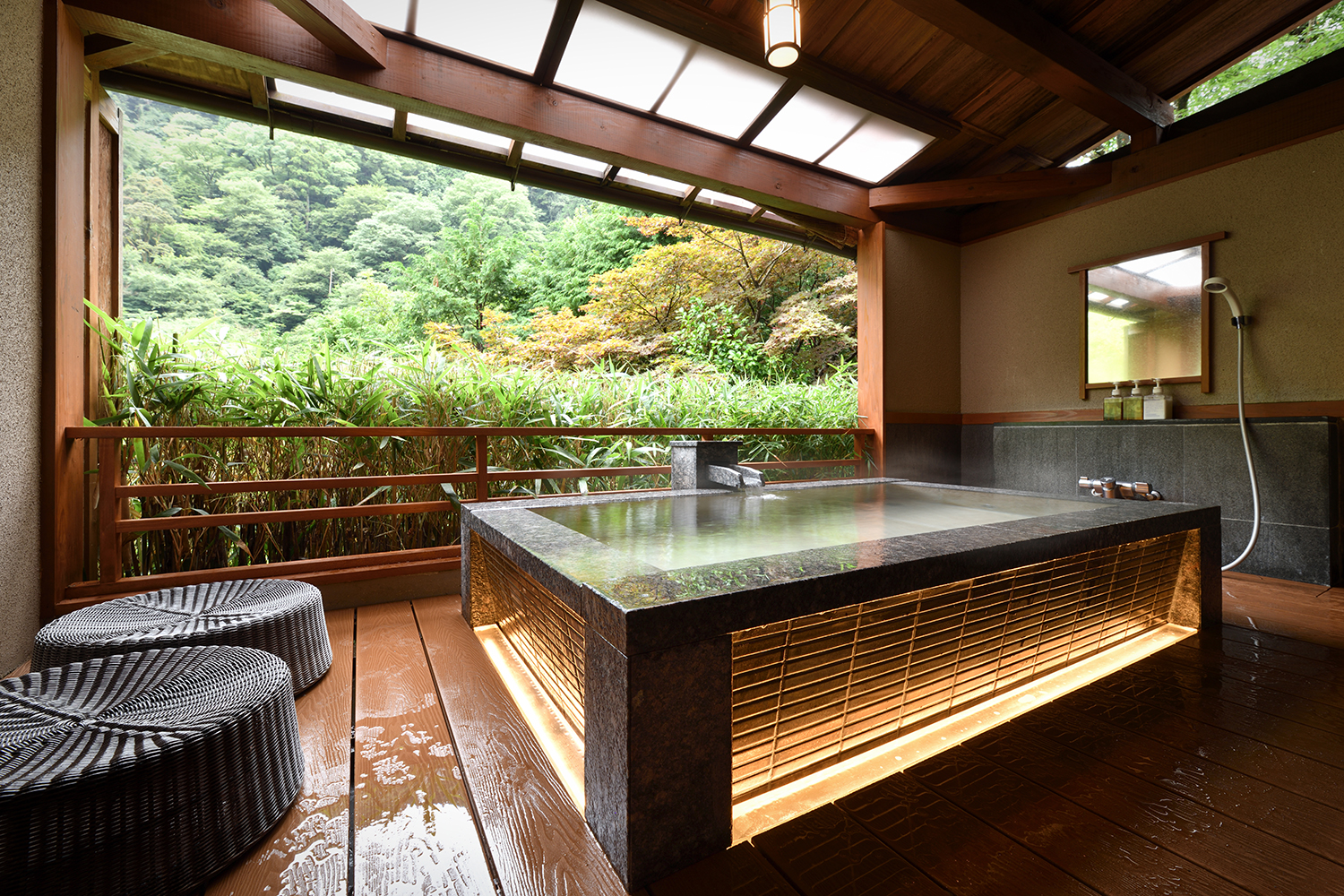
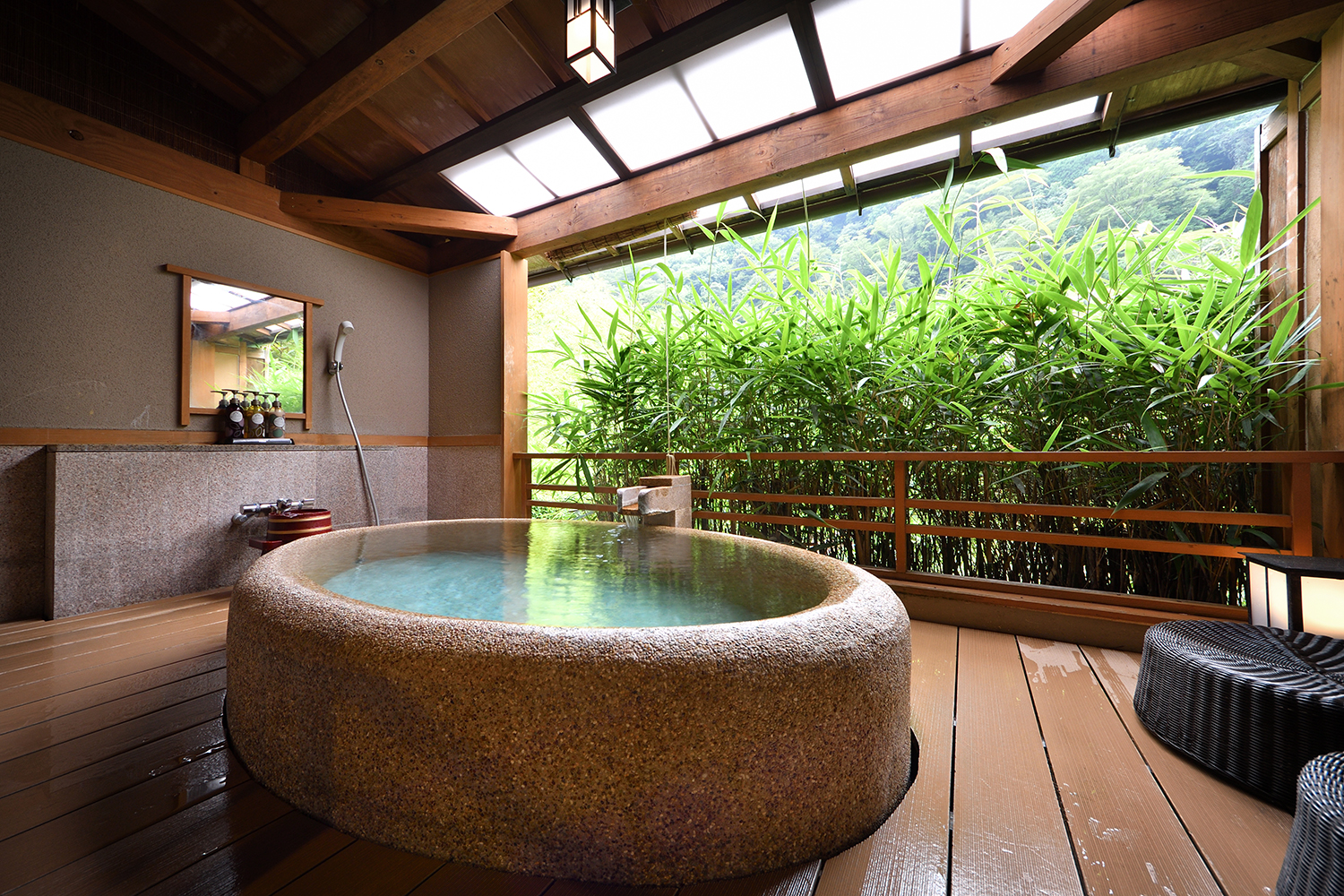
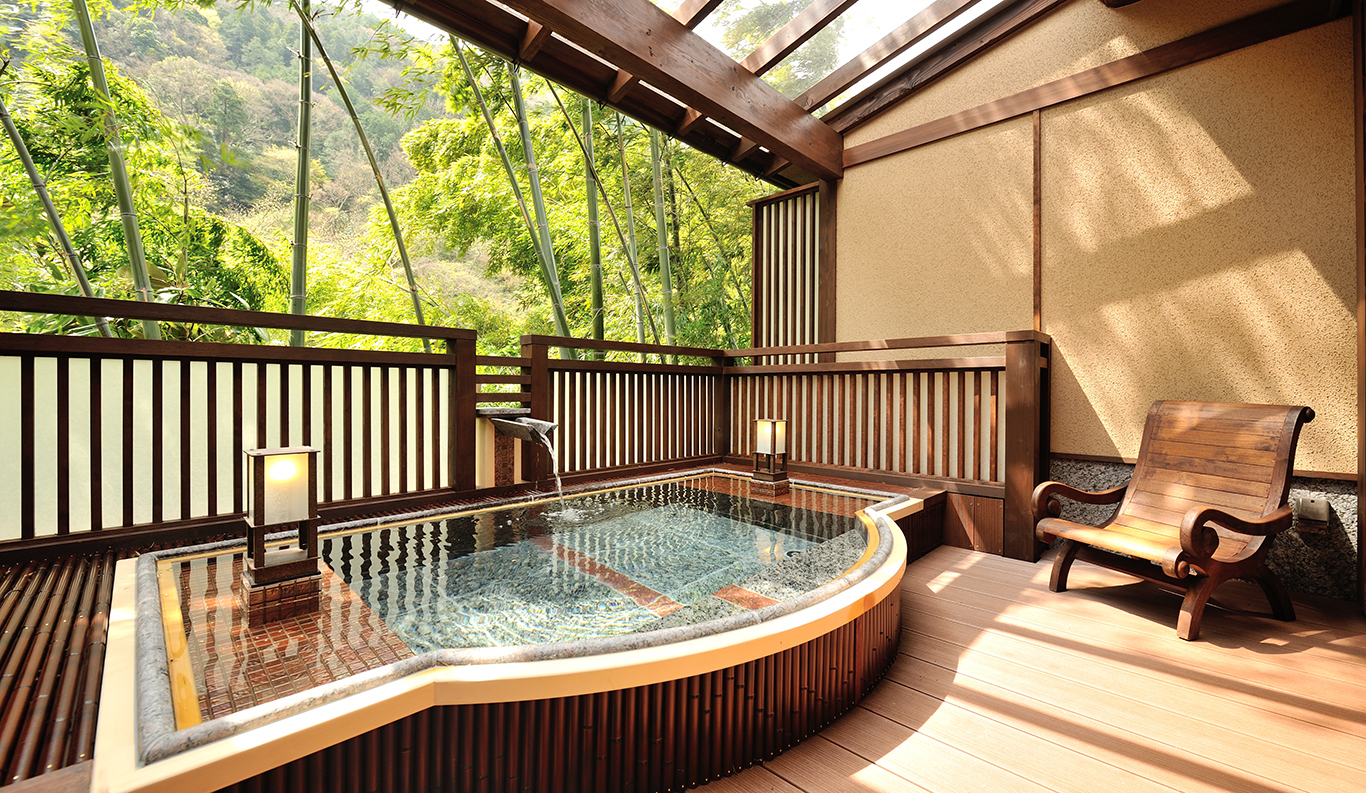
2-4 66 sqm Private Open-air Bath Futon This room features futons, a tatami room and a sitting area overlooking the forested slopes above the river gorge. The rotemburo is a spacious handmade 900-liter stone bathtub shielded by bamboo, with a pleasant view of the mountains. ¥ 76,409~ per person (based on double occupancy) *Room rates at the Ryokan vary depending on the season and booking status. Therefore, we provide an estimated amount as a reference. REQUEST THIS ROOM -
ROOM
Special Room C – Himeshara/Kikyo
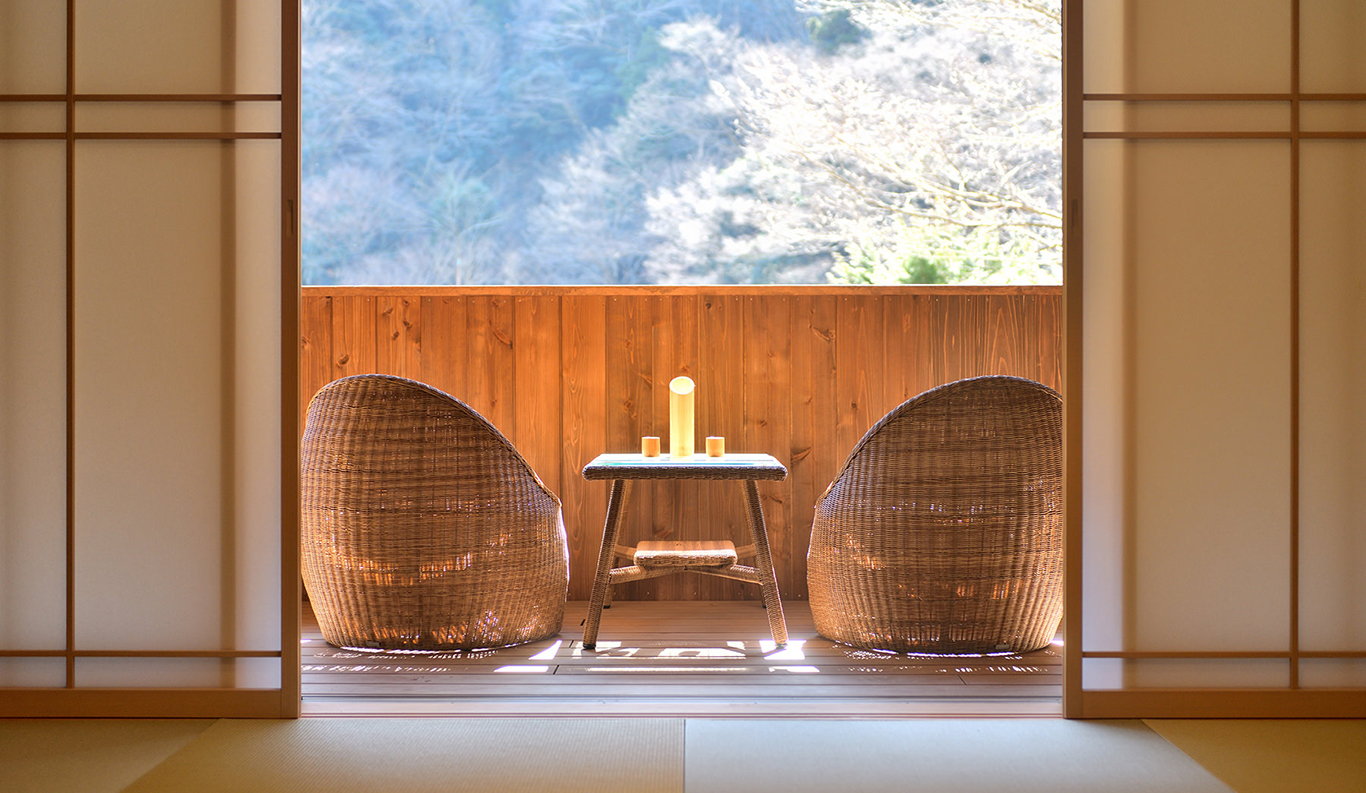
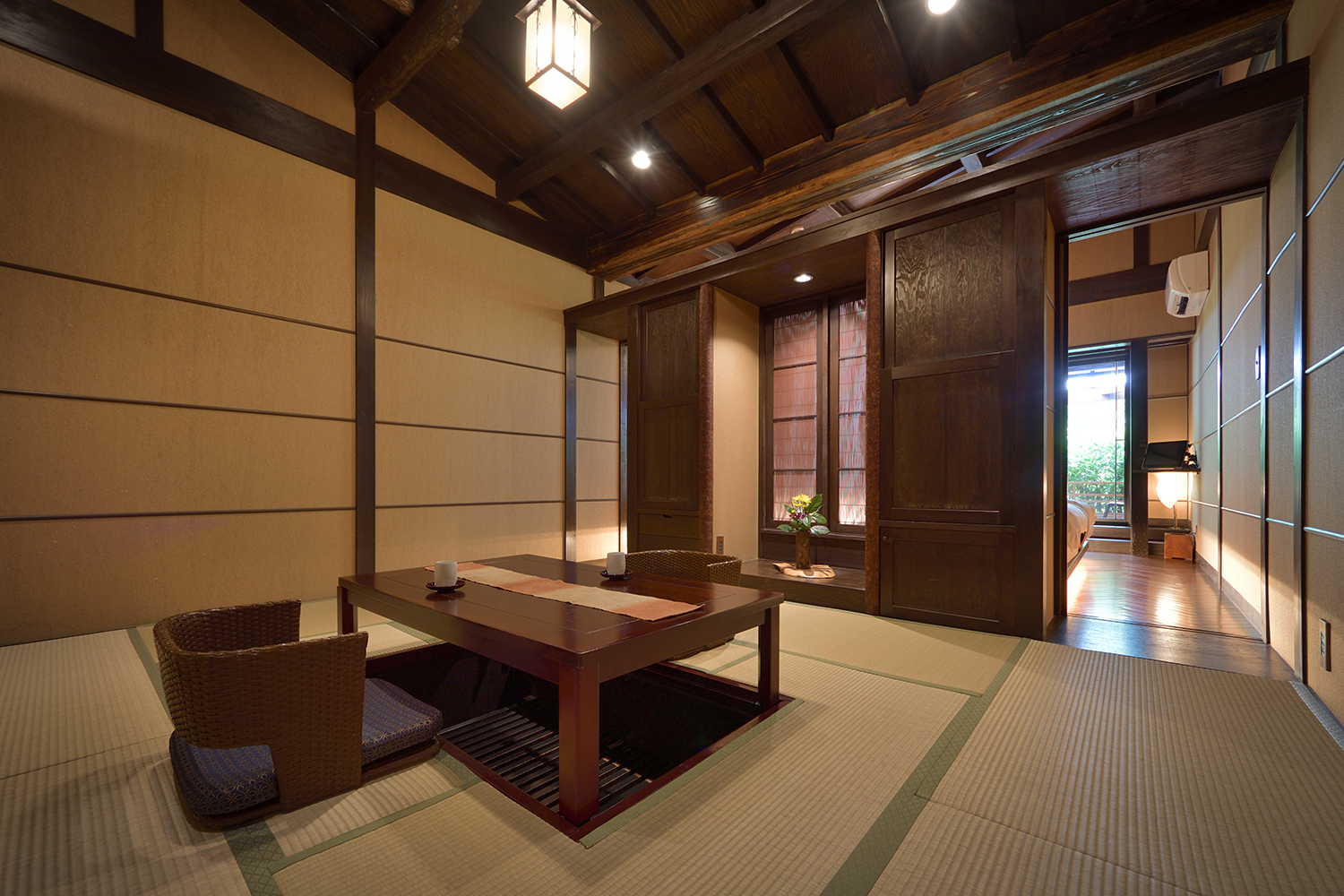
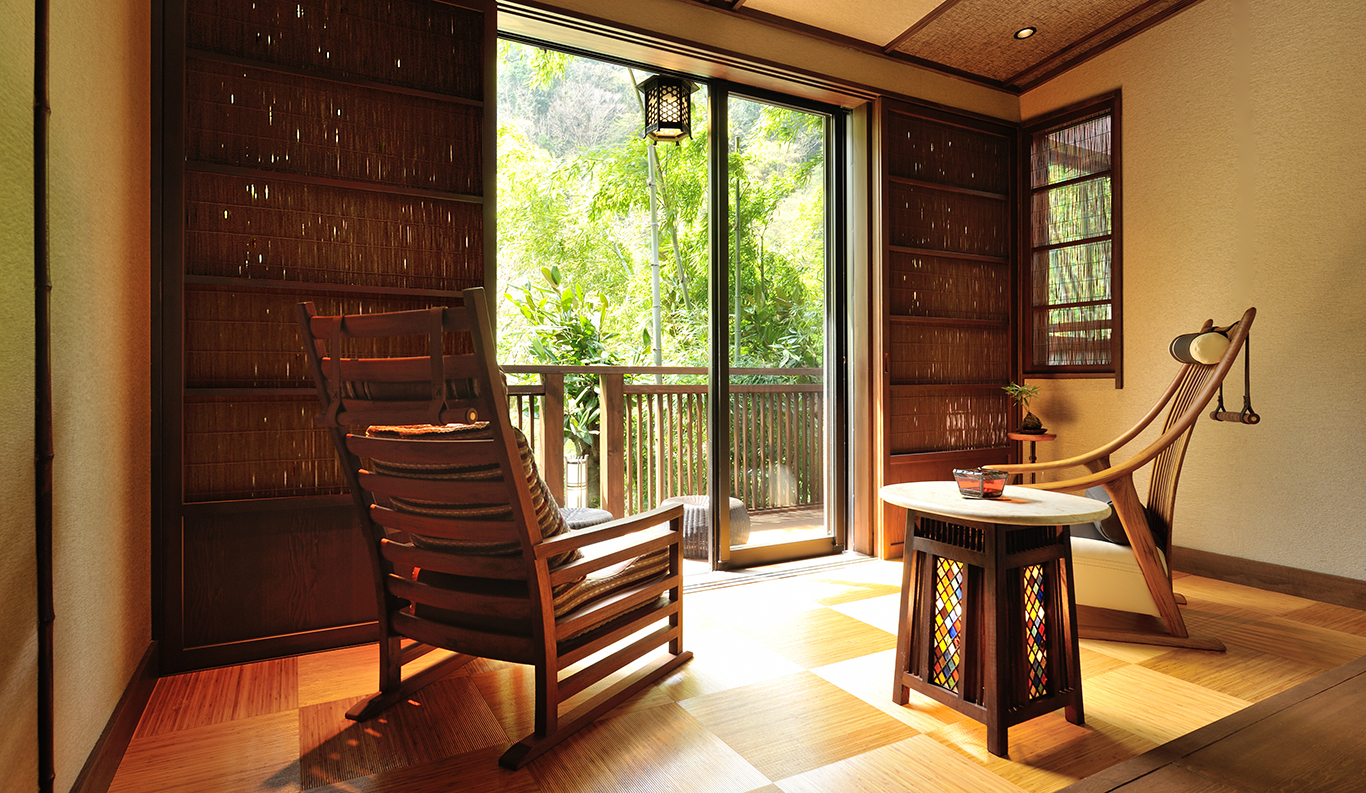
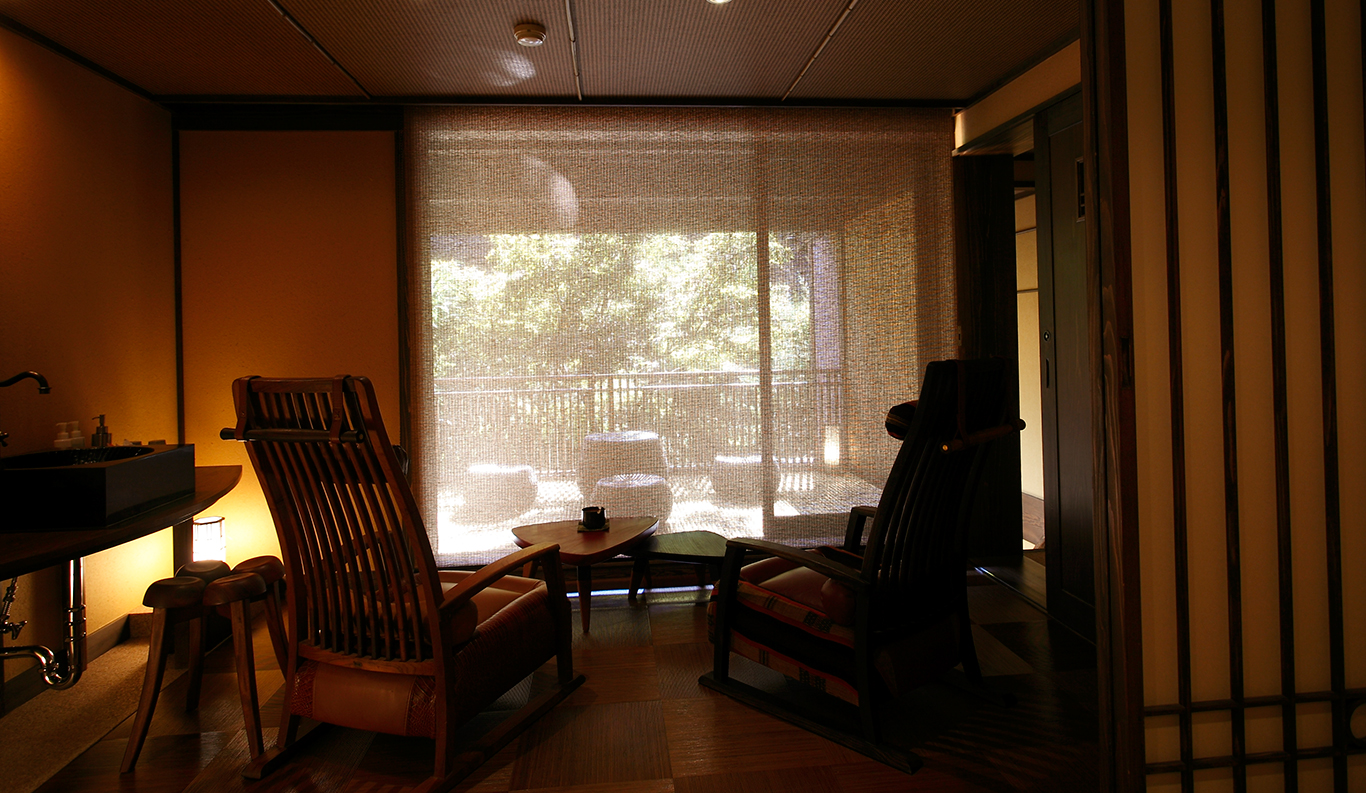
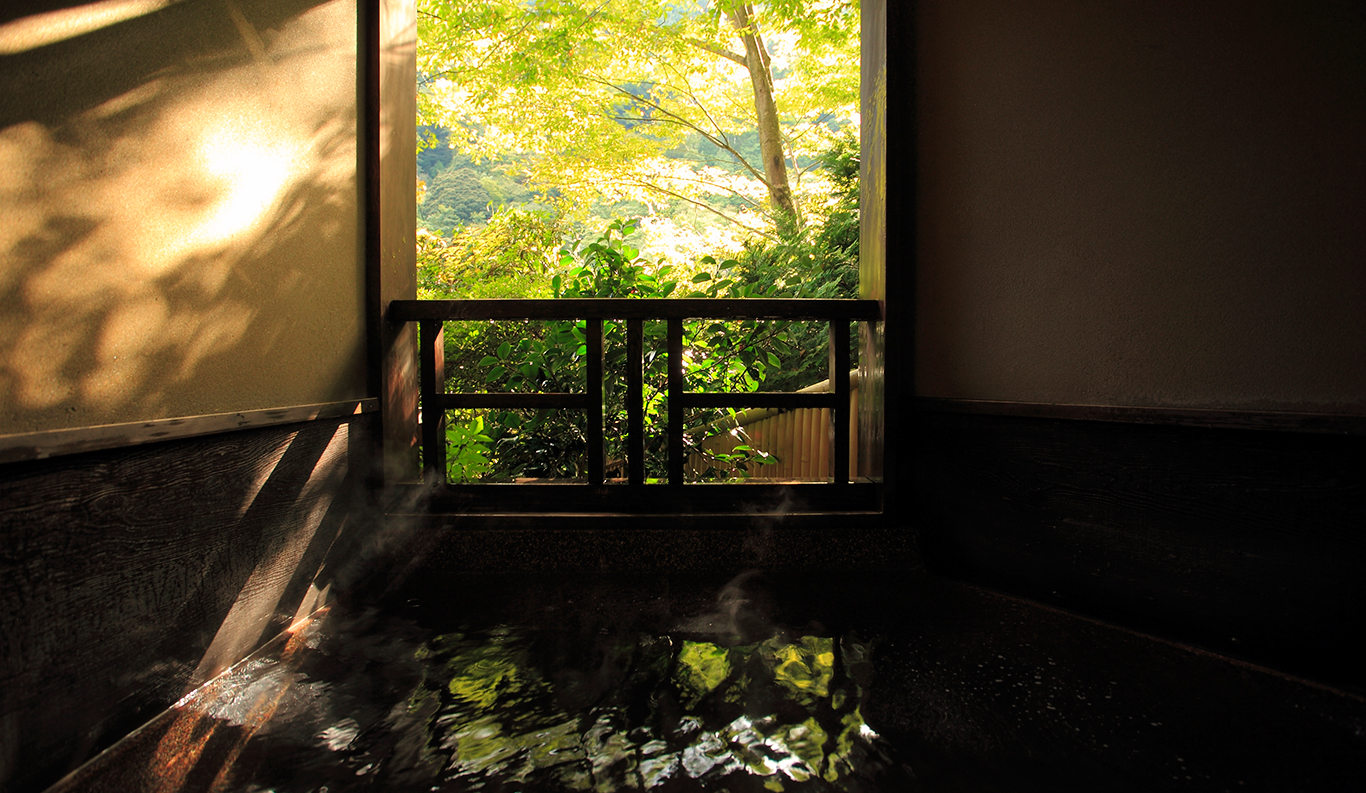
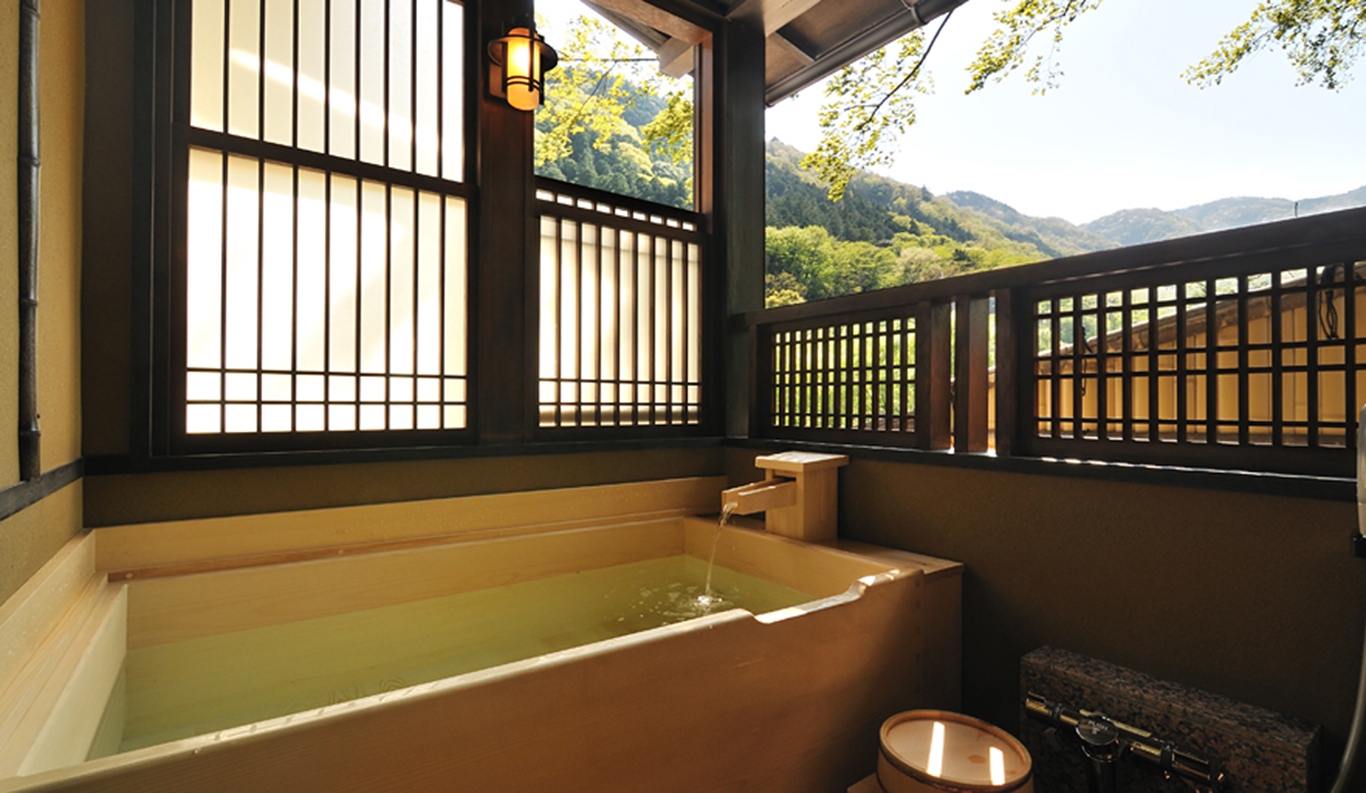
1-3 55 sqm Private Open-air Bath Bed This is a twin room, with a rotemburo on the veranda made of hinoki wood and a sitting area that invites ease and contemplation of the reflections of the rotemburo's waves refracted up to the ceiling beams. Bamboo shields the rotemburo fro sight, as well as filtering the sunlight and imparting a beautiful swishing sound as it sways in the breeze. The room also has a cozy kotatsu (a table with a heater underneath) with a leg space that will be especially appreciated by foreign guests not used to sitting on tatami mats. ¥ 74,948~ per person (based on double occupancy) *Room rates at the Ryokan vary depending on the season and booking status. Therefore, we provide an estimated amount as a reference. REQUEST THIS ROOM -
ROOM
Tsukimidai-room Ajisai
2-4 65 sqm Private Open-air Bath Futon The spacious, private stone open-air bath, complete with a moon-viewing platform offering a great view, offers a sense of privacy. Enjoy the private hot spring water from Tonosawa, pumped up from 300 meters underground. The spacious, relaxing 15-tatami Japanese-style room can accommodate up to six guests. ¥ 75,745~ per person (based on double occupancy) *Room rates at the Ryokan vary depending on the season and booking status. Therefore, we provide an estimated amount as a reference. REQUEST THIS ROOM -
ROOM
Tsukimidai room Nadeshiko
2-4 45 sqm Private Open-air Bath Futon The spacious stone open-air bath, filled with Tonosawa no Yu, a private hot spring pumped up from 300 meters underground, is a modern design with lanterns placed inside the bathtub.The room is designed for spaciousness, featuring a moon-viewing platform where you can enjoy mountain views and quiet moonlit nights, followed by a 4-tatami veranda and a 10-tatami Japanese-style room. ¥ 69,237~ per person (based on double occupancy) *Room rates at the Ryokan vary depending on the season and booking status. Therefore, we provide an estimated amount as a reference. REQUEST THIS ROOM -
ROOM
Tsukimidai-room Kaede
2-4 55 sqm Private Open-air Bath Futon The spacious, private, open-air stone bath is filled with Tonosawa hot spring water, pumped up from 300 meters underground, and includes a small moon-viewing deck. From the moon-viewing deck in the spacious 12-tatami Japanese-style room, you can fully enjoy the mountain views and the quiet moonlit night. ¥ 69,237~ per person (based on double occupancy) *Room rates at the Ryokan vary depending on the season and booking status. Therefore, we provide an estimated amount as a reference. REQUEST THIS ROOM -
ROOM
Tsukimidai-room A - Yama no Ichigo
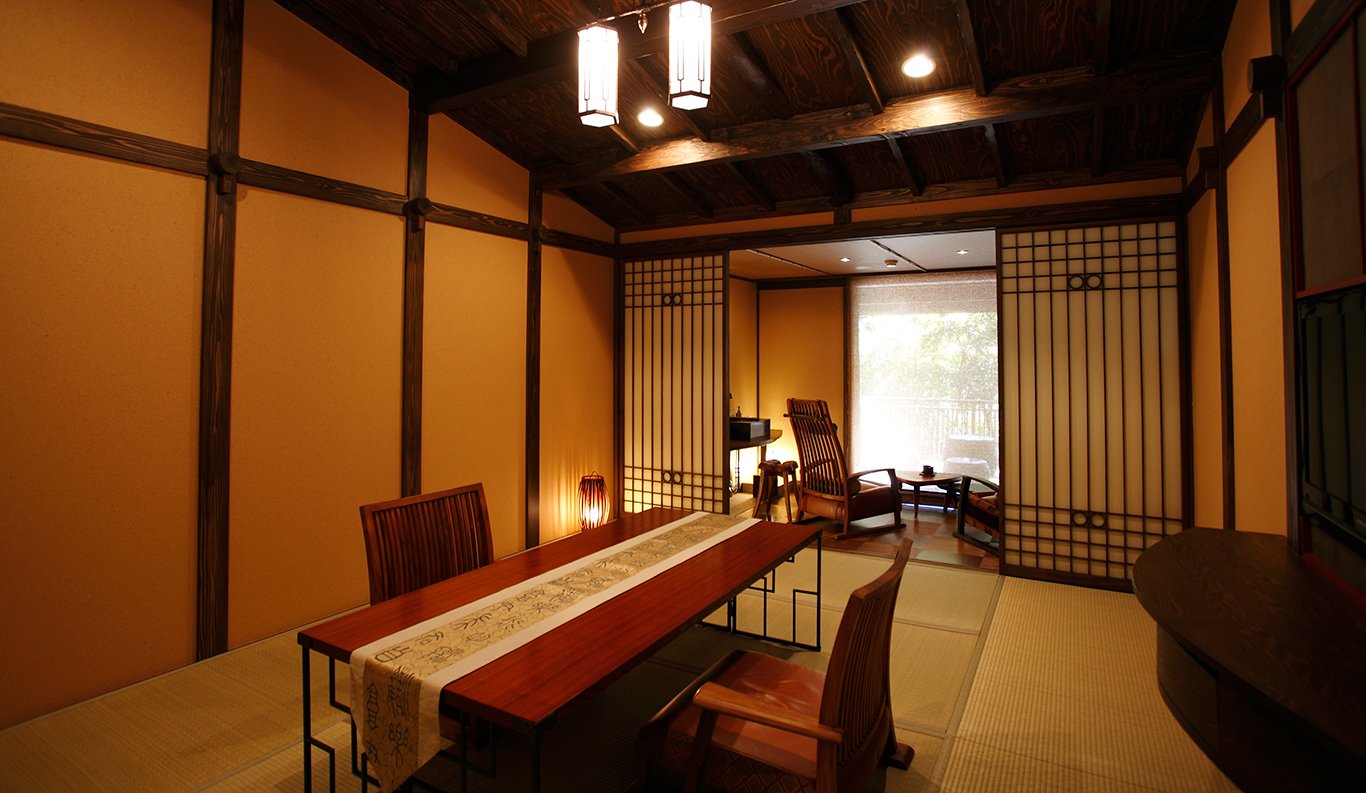
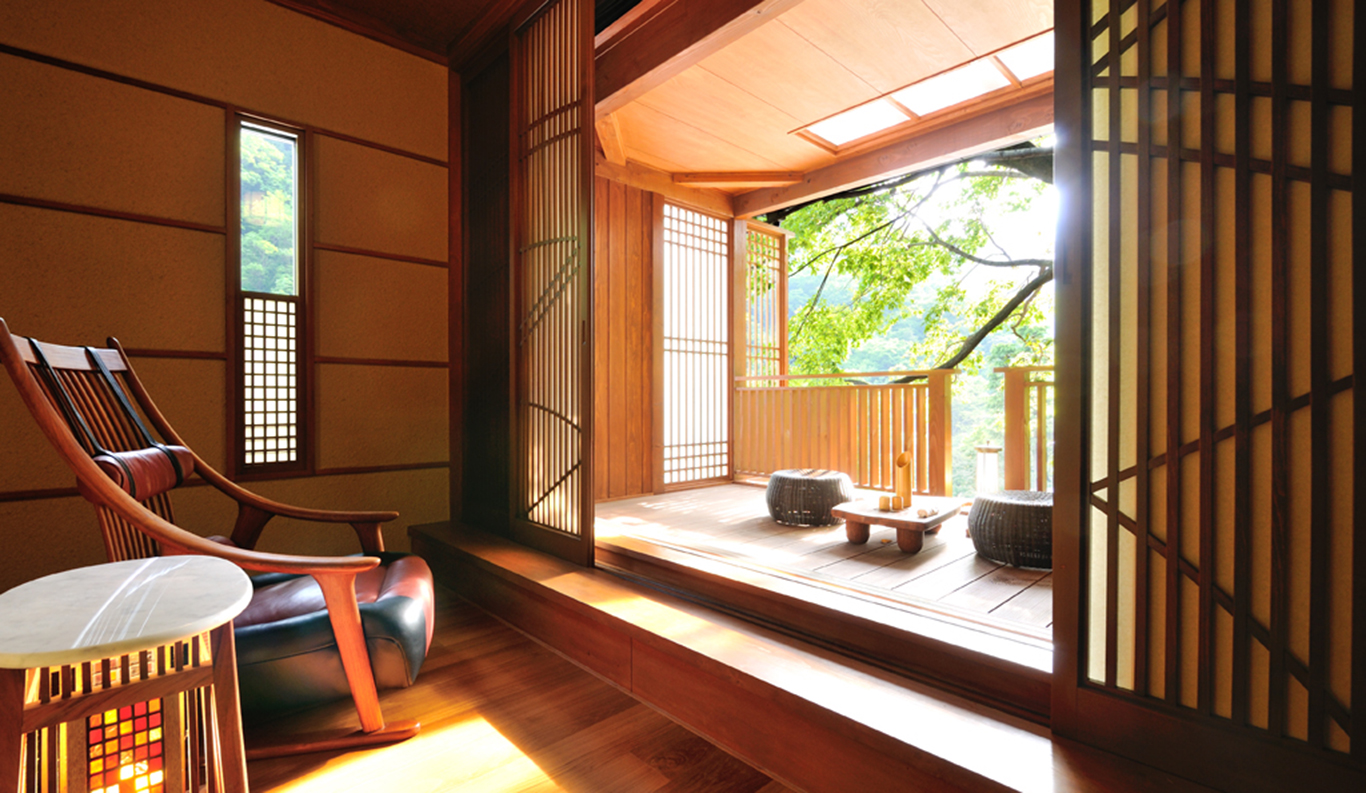
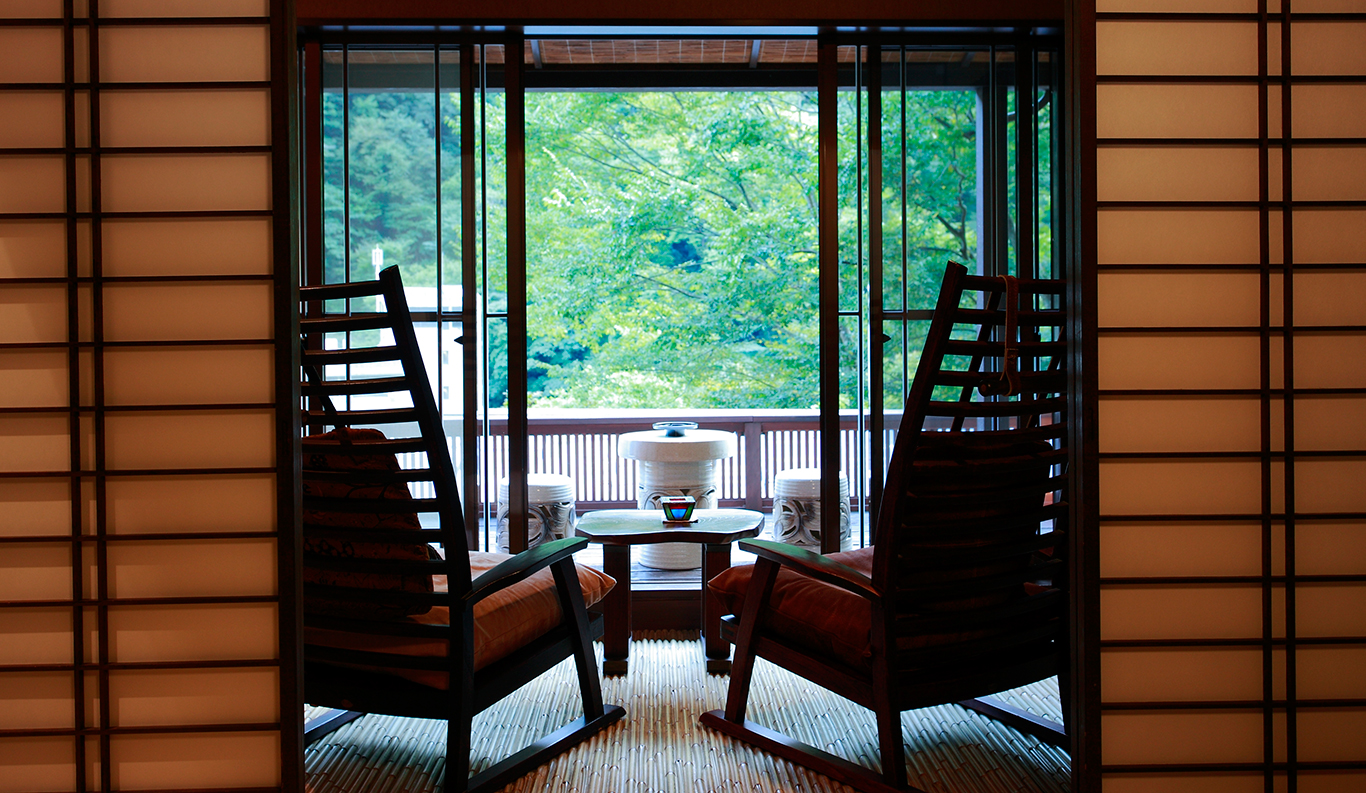
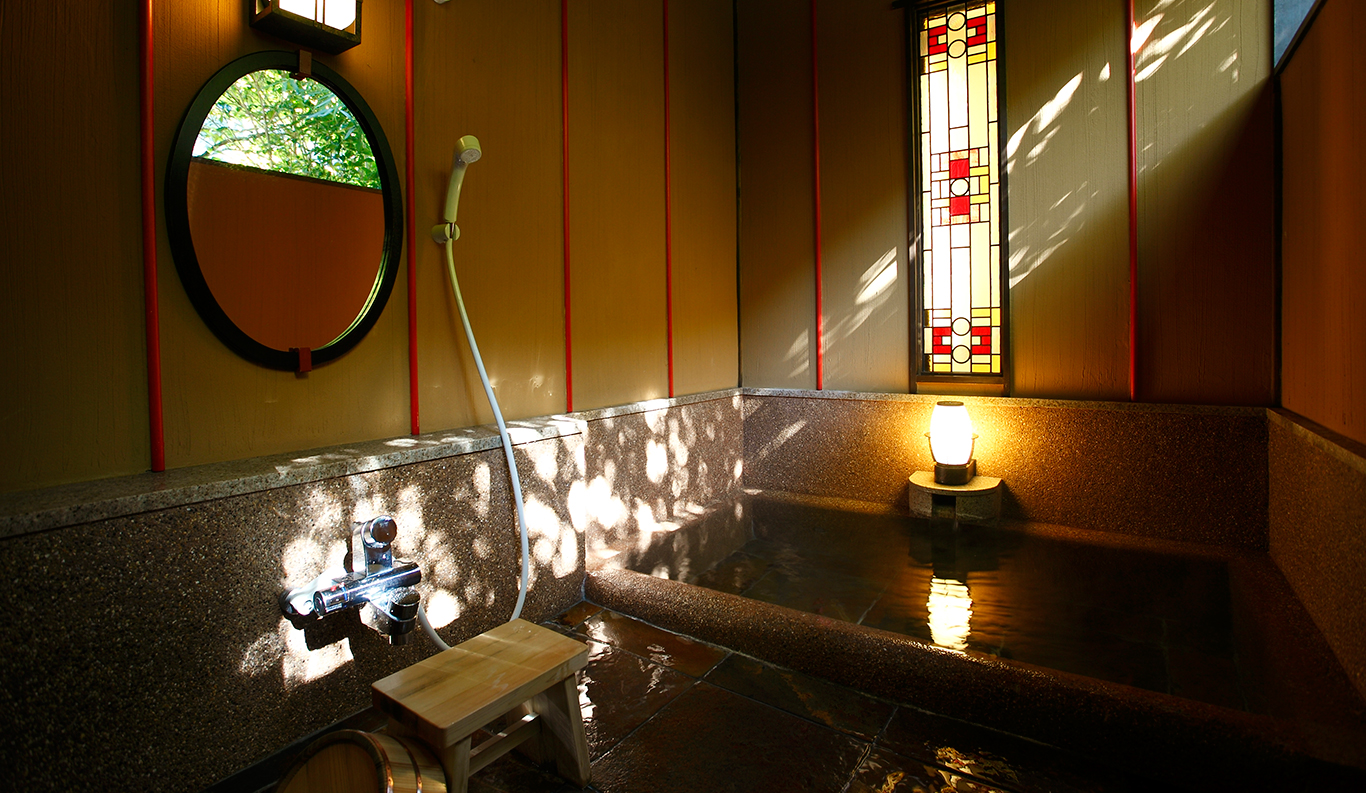
2-4 51 sqm Private Open-air Bath Futon Korean sense and furnishings. A sitting room, easy chairs and a pretty maple tree that turns colors twice a year, in May and fall, round out a delightful space. The rotemburo is down a long set of stairs, to a cave-like space where a stained glass window filters the light falling on wooden walls with red accents, and a screen of bamboo leaves provides a sweet, private place to enjoy the delights of the bath. ¥ 67,775~ per person (based on double occupancy) *Room rates at the Ryokan vary depending on the season and booking status. Therefore, we provide an estimated amount as a reference. REQUEST THIS ROOM -
ROOM
Tsukimidai-room B - Yama no Yuube
2-4 40 sqm Private Open-air Bath Futon Tsukimidai means "moon-viewing deck," and these rooms have all been designed with this rather pleasant activity in mind. One of these rooms, called Yama no Ichigo, is decorated with an elegant Korean sense and furnishings. A sitting room, easy chairs and a pretty maple tree that turns colors twice a year, in May and fall, round out a delightful space. The rotemburo is down a long set of stairs, to a cave-like space where a stained glass window filters the light falling on wooden walls with red accents, and a screen of bamboo leaves provides a sweet, private place to enjoy the delights of the bath. ¥ 64,853~ per person (based on double occupancy) *Room rates at the Ryokan vary depending on the season and booking status. Therefore, we provide an estimated amount as a reference. REQUEST THIS ROOM -
ROOM
Japanese Twin Room - Takenoko
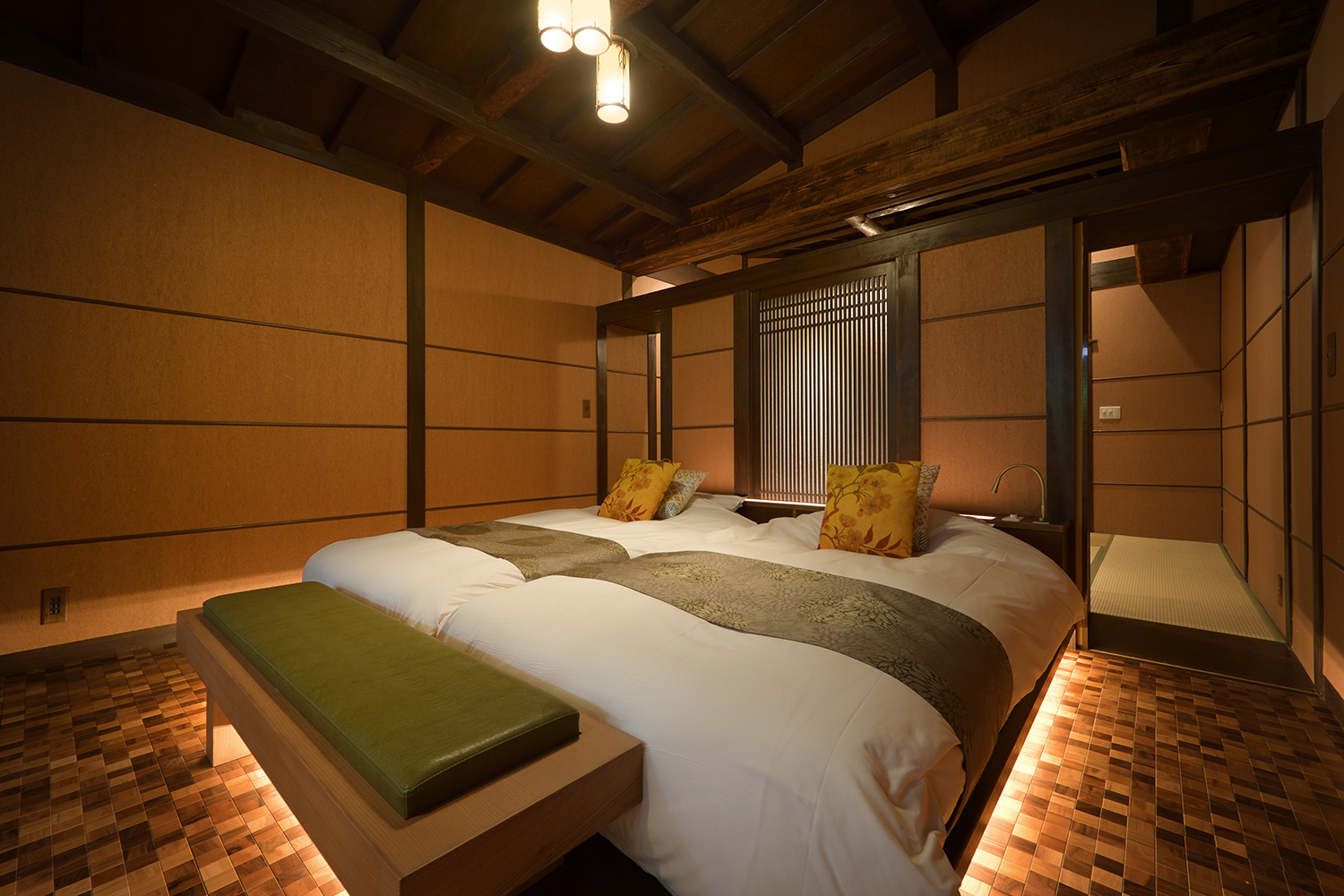
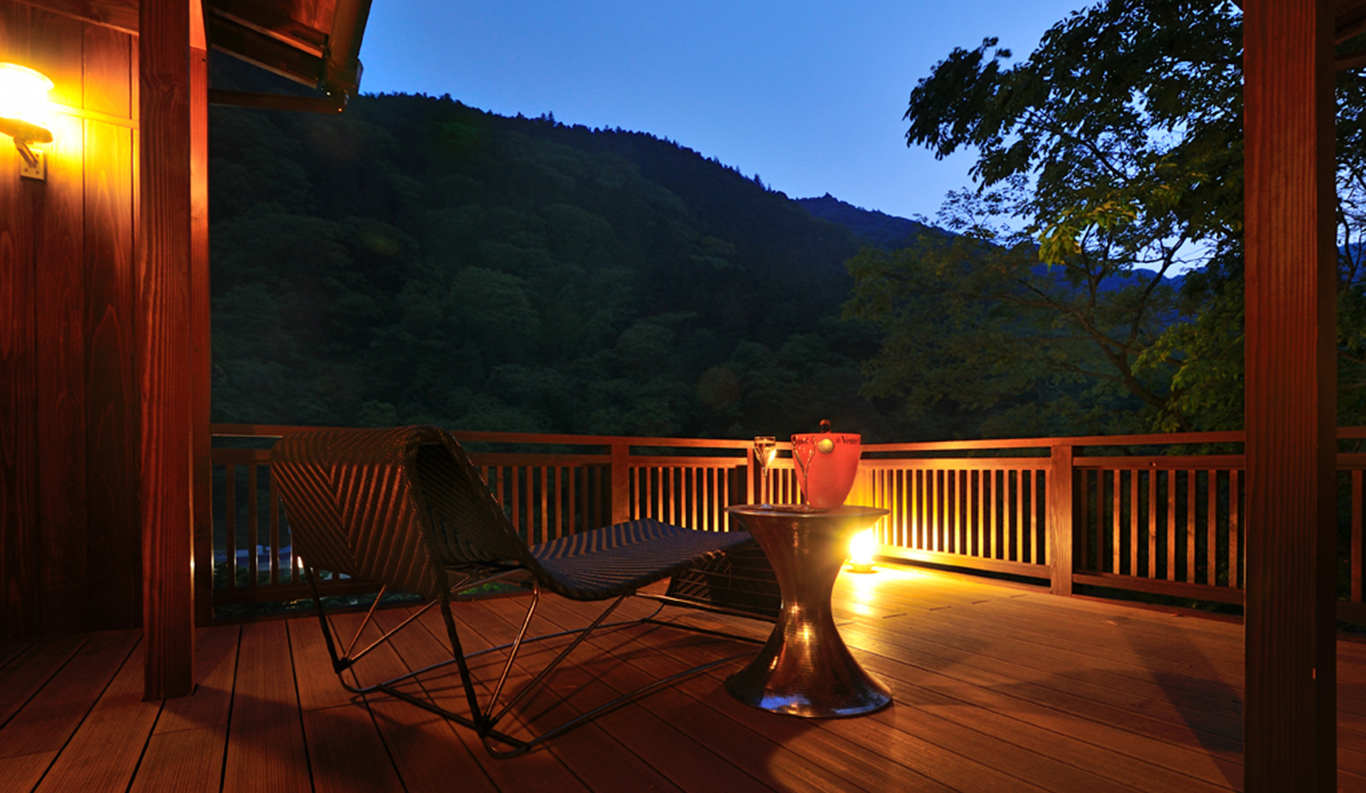
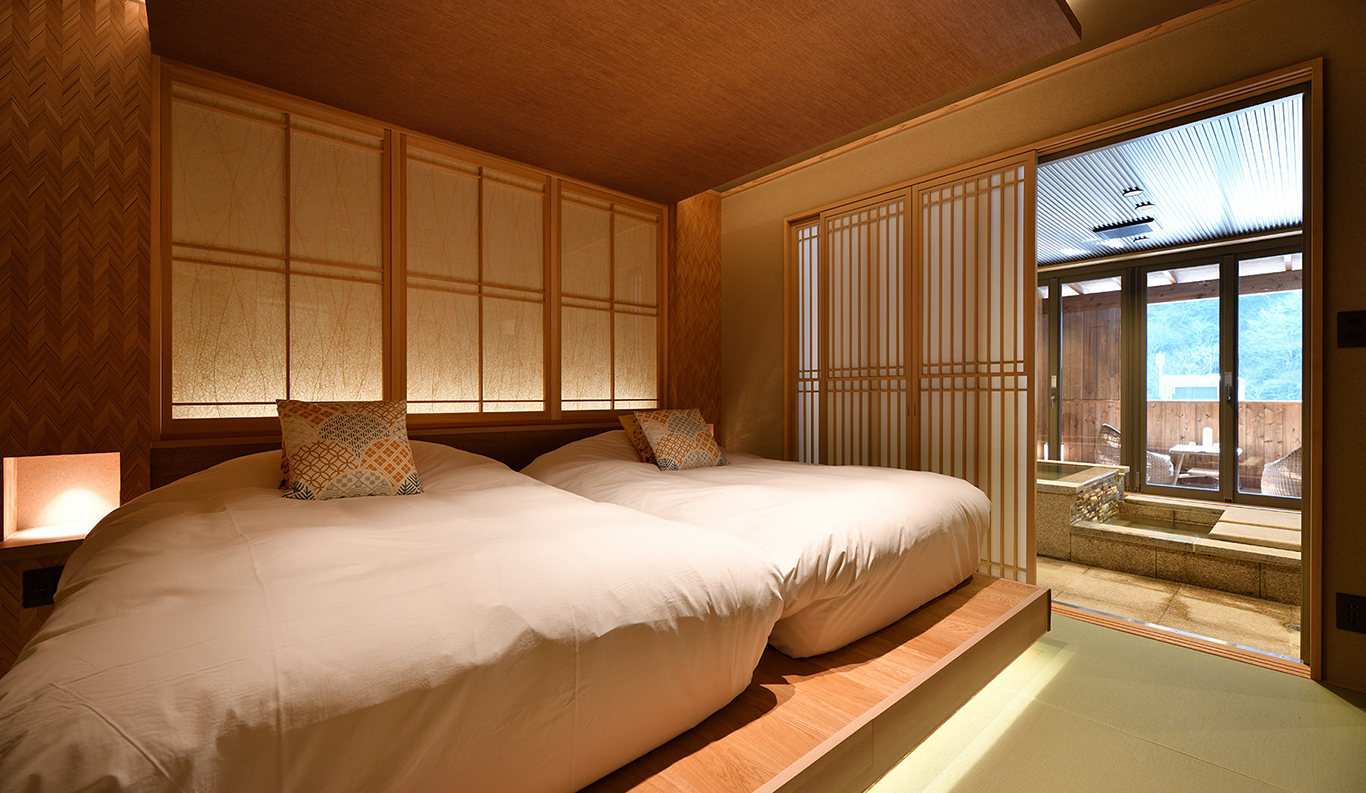
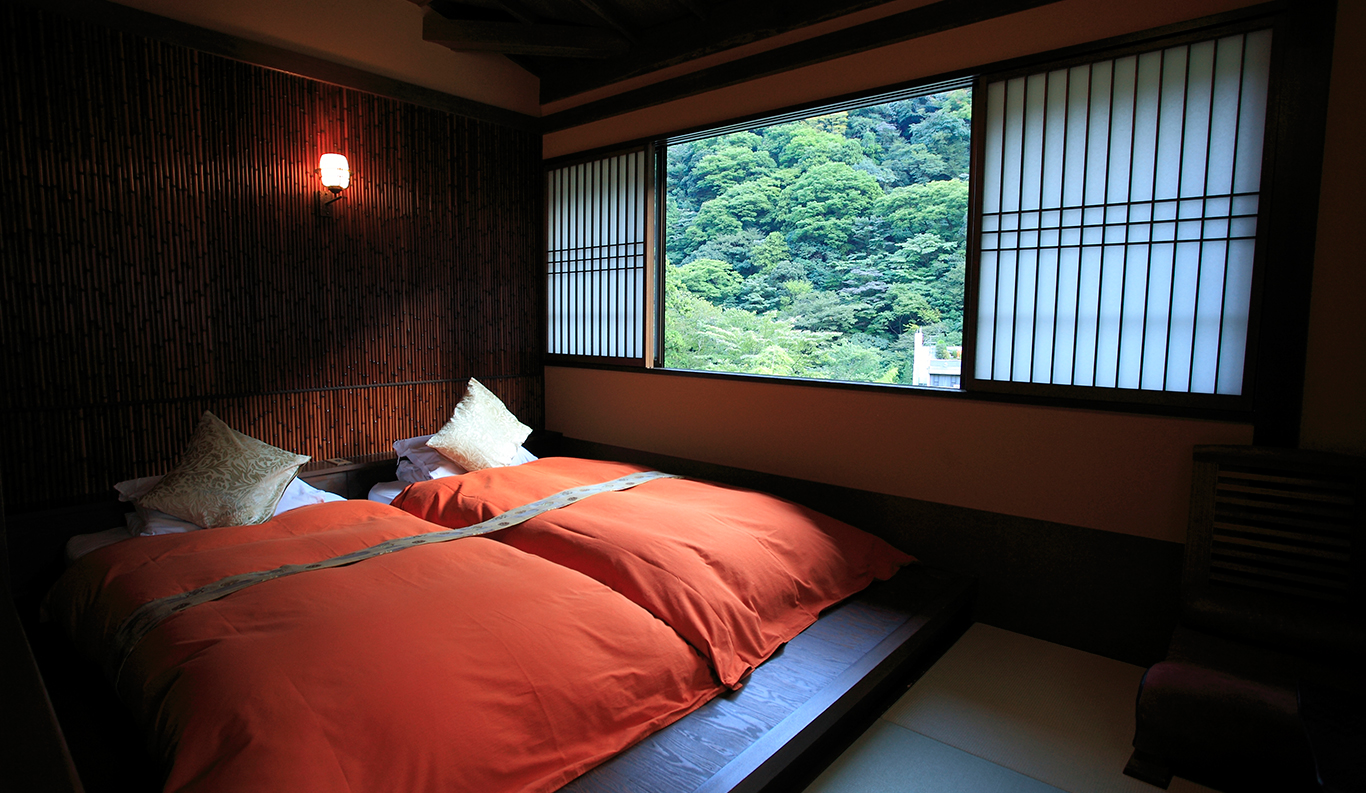
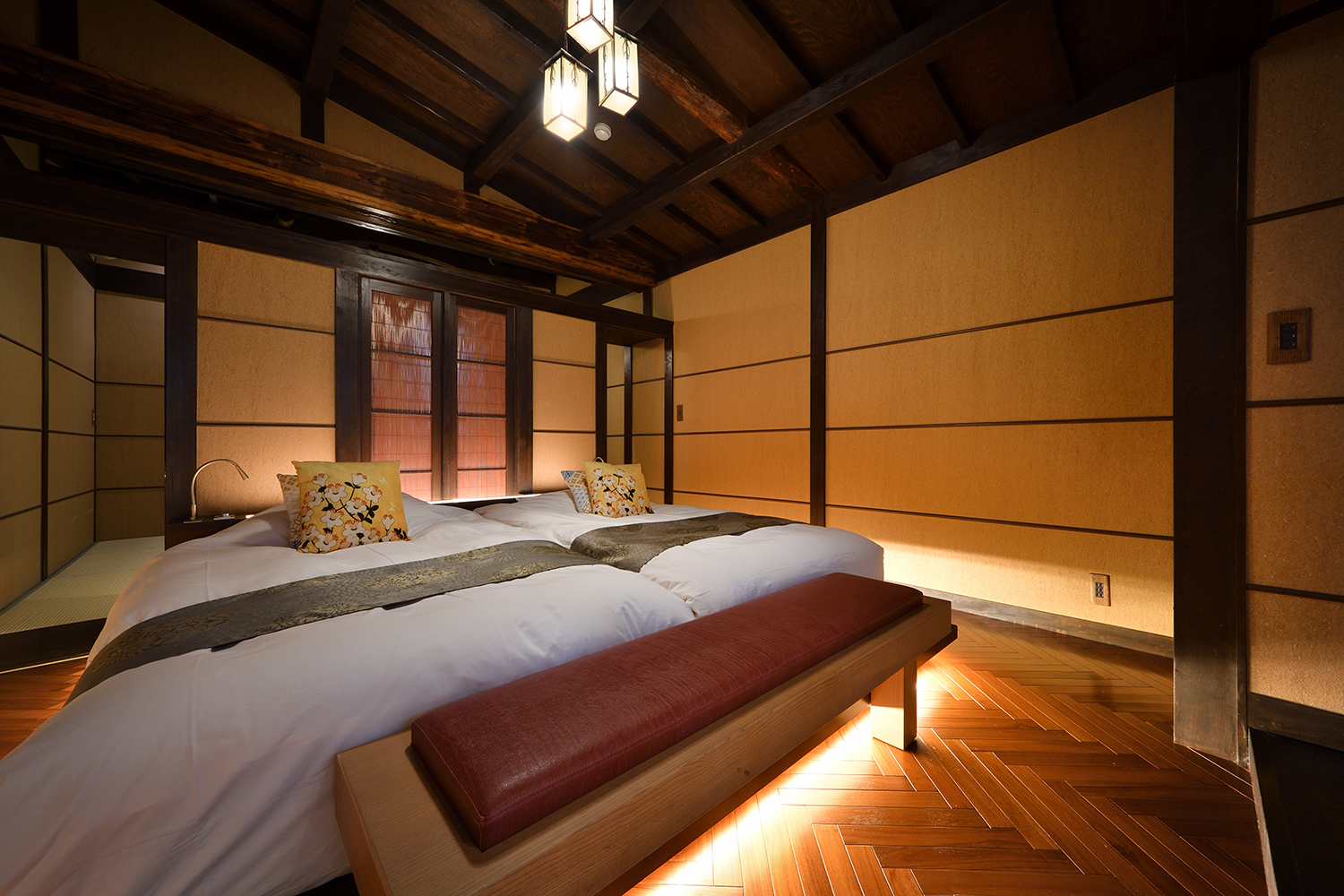
1-2 40 sqm Private Open-air Bath Bed The ryokan's Western-style room is similar to the Japanese-style rooms, but with a raised platform for the futons and a table and chairs. It also has a big Western-style bathtub in the open air on the deck, a sitting room and all the Yama No Chaya amenities. ¥ 61,931~ per person (based on double occupancy) *Room rates at the Ryokan vary depending on the season and booking status. Therefore, we provide an estimated amount as a reference. REQUEST THIS ROOM

FACILITIES &
SERVICES
-
Cuisine
-
Bath
-
Bar Lounge


-
Cuisine
Yama No Chaya's cuisine, like the rest of the ryokan, is artistic and elegant, and Chef Yoshida makes the most of its special attributes its natural onsen source, as well as the freshwater spring on the premises to create a unique, natural, exceptionally healthy and delicious cuisine.
-
Bath
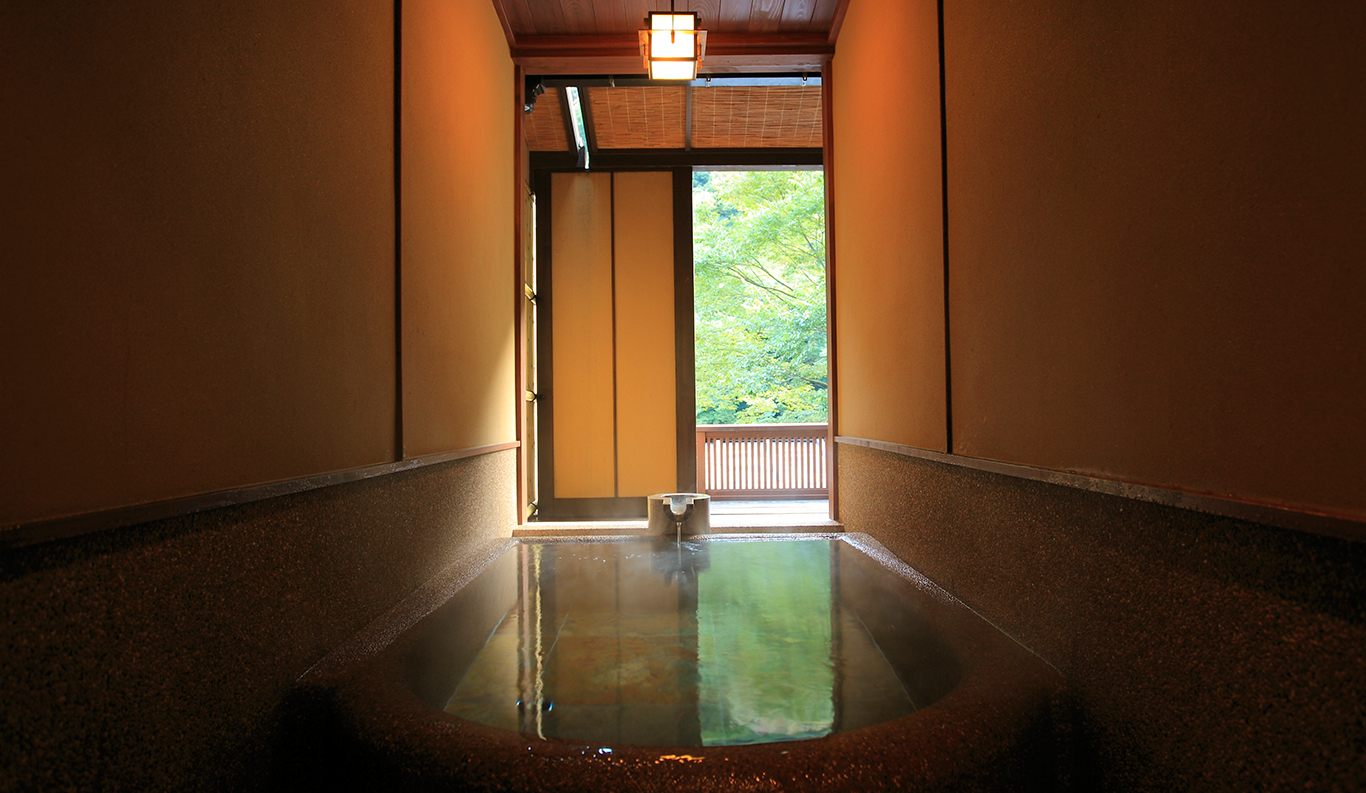
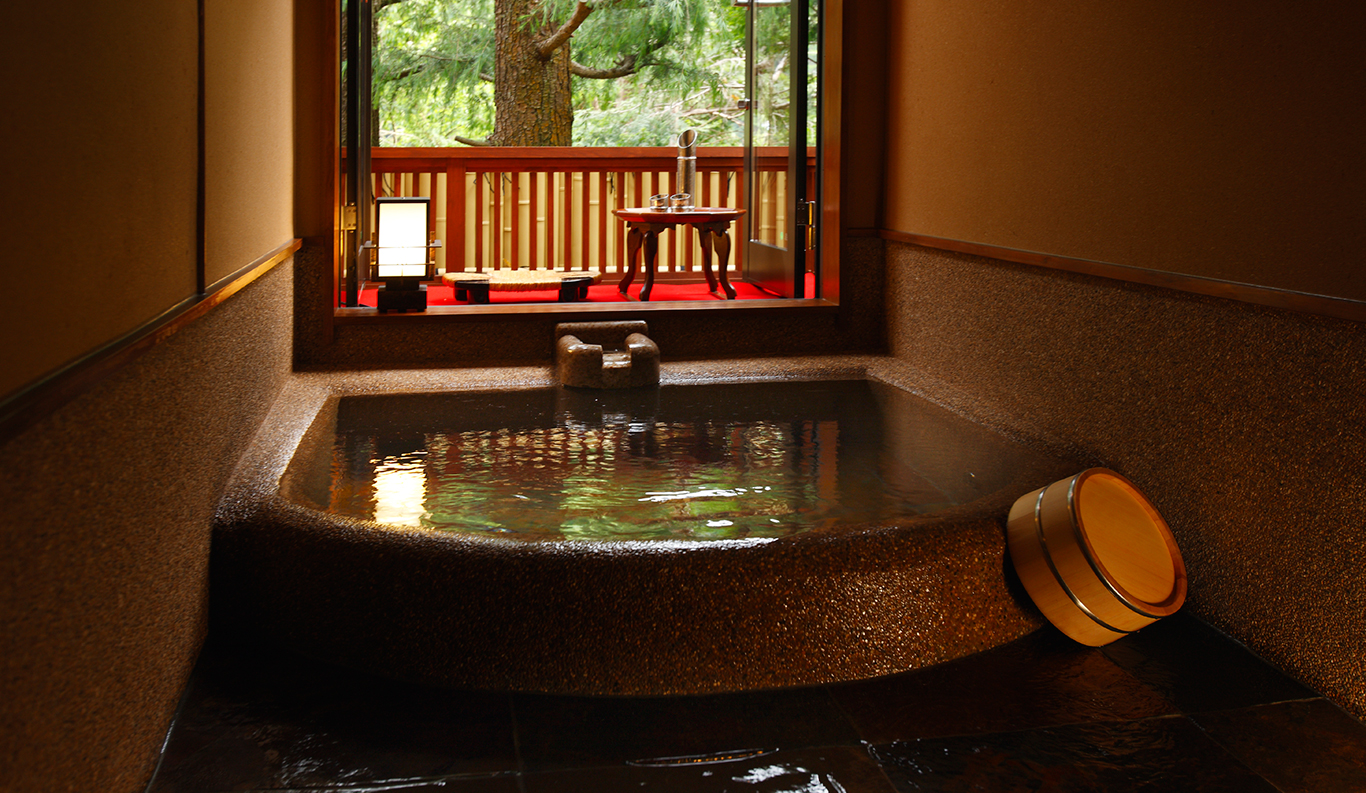
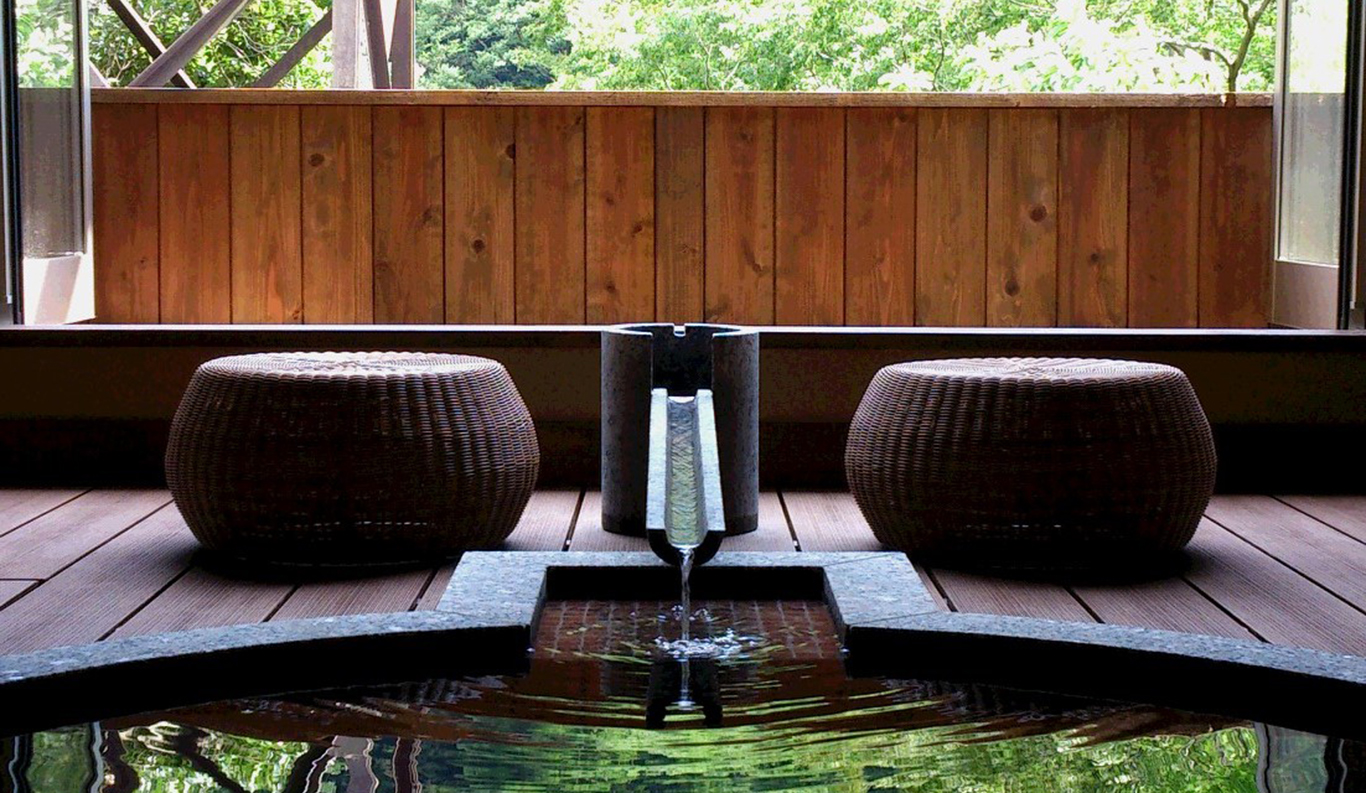
Yama No Chaya's baths feature water drawn from a spring right on the property, which produces a slightly alkaline water, perfect for making the skin smooth and soft. The spring is part of the Tonosawa onsen source, discovered in the year 710, and in continual use for the 1,300 years since.
-
Bar Lounge
Yama No Chaya's bar specializes in shochu (a delicious distilled liquor made from sweet potatoes, barley, rice or chestnuts) and has about 50 kinds to suit every taste, from beginner to seasoned shochu aficionado. The ryokan also has a comfortable lounge.


Experience
-
 Mt. Fuji and Environs Hakone, KANAGAWA 4 Days 3 Nights
More
Mt. Fuji and Environs Hakone, KANAGAWA 4 Days 3 Nights
More


Map &
Transportation
| Closest Train Station | Hakone-Yumoto Station | |
|---|---|---|
| Closest Bus Station | N/A | |
| Free pick-up service | No | |
| Complimentary Transfer is not available 3 min by taxi from Hakone Yumoto station | ||
Key Gate Way Int'l Airport and Train (Shinkansen) Station
Ryokan Data
| Area | Hakone / 箱根 |
|---|---|
| Name of Ryokan | Yama No Chaya / 山の茶屋 |
| Address | 171 Tonosawa, Hakone-machi, Ashigarashimo-gun, Kanagawa 250-0315 〒250-0315 神奈川県足柄下郡箱根町塔之沢171 |
| Total Number of Rooms | 15 room(s) |
| Check-in Time | 15:00 |
| Check-Out Time | 10:00 |
| Credit Card | Yes |
Meals
| Dinner Start Time | 18:00 / 18:30 |
|---|---|
| Breakfast Start Time | 8:00 / 8:30 |
| In Room Dining Available | Guest room or private dining room / Starting time : 1800 - 1900 |
| Bar | |
| Special Dietary Arrangements | Yes |
| Vegan Friendly | No |
| Western Breakfast Available | No |
Other Facilities & Services
| Communal Bath | Yes |
|---|---|
| Family Bath | Yes |
| Private indoor bath in room | Yes |
| Private open-air bath in the room | Yes |
Room Rates
| Room Type | Minimum Rate (JPY) |
|---|---|
| Special Room - Asebi | JPY87,965~ |
| Special Room - Yamayuri | JPY83,714~ |
| Special Room A - Yama no Tomoshibi | JPY79,332~ |
| Special Room B - Yama no Ashita | JPY76,409~ |
| Special Room C – Himeshara/Kikyo | JPY74,948~ |
| Tsukimidai-room Ajisai | JPY75,745~ |
| Tsukimidai room Nadeshiko | JPY69,237~ |
| Tsukimidai-room Kaede | JPY69,237~ |
| Tsukimidai-room A - Yama no Ichigo | JPY67,775~ |
| Tsukimidai-room B - Yama no Yuube | JPY64,853~ |
| Japanese Twin Room - Takenoko | JPY61,931~ |
** The room rate is per person per night when 2 adults stay in one room. **
- The rate will change depending on the number of guests and dates. Please contact us for details.
- Ryokan rate includes a full-course dinner, breakfast, service charge, and tax.
- The mentioned rates and service are available only for LRC Members who book through The Ryokan Collection's website.
- The rates are subject to change without any prior notice.
- A particular room cannot be guaranteed in advance unless otherwise stated by The Ryokan Collection.
Child Rate: Child-friendly
- The rate will change depending on the number of guests and dates. Please contact us for details.
- Ryokan rate includes a full-course dinner, breakfast, service charge, and tax.
- The mentioned rates and service are available only for LRC Members who book through The Ryokan Collection's website.
- The rates are subject to change without any prior notice.
- A particular room cannot be guaranteed in advance unless otherwise stated by The Ryokan Collection.
Child Rate: Child-friendly